Heart on paper…

One of the reasons I first started writing was to figure out what was going on inside my head… inside my heart. It somehow seemed to help when I “verbalized” whatever I was going through in black and white… with pen and paper.

One writing in particular still stands out in my memory. I remember when it was written. Where I was. What I was struggling with…

I was a freshman at university. It was a cold, dreary winter day. I had driven our family’s big, yellow station wagon over to “the Fort,” a local beach that to this day is my all-time favorite beach because of its pristine, uncluttered shoreline. I was trying to figure out who I was… what life is all about… how God fits into the picture, IF He does.

I vividly remember the way the sky looked. Threatening… yet at the same time, hopeful. Sun rays were peaking through the gloom. As if God were reaching down from heaven, reaching out His hands to me, wanting to pull me out of my despair and confusion.

Unfortunately, what I wrote that wintry day got lost over the years. But I still look back on that day as when I began to value putting my heart on paper.

Fast forward to today…

As I’ve been reading through the Old Testament of the Bible, I’m increasingly overwhelmed by seeing the heart of the authors on paper. I’m at that point in the story where the children of Israel are about to enter the Promised Land. They’ve been wandering in the wilderness for forty years (due to the disobedience of some of their leaders). They’ve been given directives as to how to best represent God to the people and nations they are preparing to conquer. They’ve been on a roller coaster of doing the right thing, blowing it, saying they’ll do better the next time… kinda sounds a lot like me!

Moses, their leader, is now 120 years old. He personally has been barred from entering the Promised Land because of losing his temper and not doing what God told him to do (see Numbers 20:12, Deuteronomy 3:23-28, and Psalm 106:32-33). In the book of Deuteronomy, Moses’ heart on paper jumps off nearly every page as he prepares the people for what lies ahead, reminding them of all that God has instructed. Reminding them of where they have come from and what is expected of them.

  • Do not fear of be dismayed… (1:21)
  • Do not be in dread or afraid of [the enemy]. The Lord your God who goes before you will Himself fight for you, just as He did for you in Egypt before your eyes, and in the wilderness, where you have seen how the Lord your God carried you, as a man carries his son… (1:29-31)
  • … listen to the statutes and the rules that I am teaching you, and do them, that you may live, and go in and take possession of the land… (4:1)
  • Only take care, and keep your soul diligently, lest you forget the things that your eyes have seen, and lest they depart from your heart… (4:9)
  • … watch yourselves very carefully. (4:15)
  • … beware lest you act corruptly… (4:16)
  • … beware lest you raise your eyes to heaven, and when you see the sun and the moon and the stars, all the host of heaven, you be drawn away and bow down to them and serve them… (4:19)
  • Take care, lest you forget the covenant of the Lord your God… (4:23)
  • … be careful… to do as the Lord your God has commanded you. (5:32)
  • … be careful to do [all God’s statutes and commands], that it may go well with you… (6:3)
  • … remember what the Lord your God did to Pharaoh and to all Egypt, the great trials that your eyes saw, the signs, the wonders, the mighty hand, and the outstretched arm, by which the Lord your God brought you out. So will the Lord your God do to all the peoples of whom you are afraid. (7:18-19)
  • … be careful to do [the whole commandment that I command you today] that you may live and multiply… (8:1)
  • … remember the whole way that the Lord your God has led you these forty years in the wilderness, that He might humble you, testing you to know what was in your heart, whether you would keep His commandments or not. (8:2)
  • Take care lest you forget the Lord your God by not keeping His commandments and His rules and His statutes… (8:11)
  • Beware lest you say in your heart, ‘My power and the might of my hand have gotten me this wealth.’ (8:17)
  • Remember and do not forget… (9:7)
  • … consider the discipline of the Lord your God, His greatness, His mighty hand and His outstretched arm… (11:2)
  • Take care lest your heart be deceived, and you turn aside and serve other gods and worship them… (11:16)
  • Take care that you do not offer your burnt offerings at any place that you see, but at the place that the Lord will choose… (12:13)
  • Be careful to obey all these words that I command you, that it may go well with you and with your children after you forever… (12:28)
  • … take care that you be not ensnared to follow [the enemy nations] after they have been destroyed before you, and that you do not inquire about their gods… (12:30)
  • … remember that you were a slave in the land of Egypt, and the Lord your God redeemed you… (15:15)
  • … remember that you were a slave in Egypt; and you shall be careful to observe these statutes. (16:12)
  • … let not your heart be faint. Do not fear or panic or be in dread of [the enemy], for the Lord your God is He who goes with you to fight for you against your enemies, to give us victory. (20:3-4)
  • … be careful to do [these statutes and laws] with all your heart and with all your soul. (26:16)
  • Be strong and courageous. Do not fear or be in dread of [the enemy], for it is the Lord your God who goes with you. He will not leave you or forsake you. (31:6)

Do you hear it?? Do you hear Moses’ heart?? Over and over again… like a parent getting ready to launch their child into the world. Do not fear. Do not be dismayed. Do not be in dread. Do not be afraid. Listen. Take care. Watch yourselves. Beware. Be careful. Remember. Consider. Do not forget. Be strong and courageous. God goes with you. He will not leave you or forsake you.

Moses’ heart on paper mirrors the heart of God.

God, our Father, over and over again wants us to know how much He loves us. How much He wants us to listen to Him and follow His instruction manual for life, the Bible. Just as those rays peaking out from behind gray clouds years ago were “reaching” for my heart so that I would turn to Him, so today God is reaching out to you, dear friend, to draw you to Himself, to encourage your heart, to guide you. In the words of Moses, “take care” that you avail yourself of all that God has to offer, and together we’ll have joy in the journey of this thing called “Life!”

The danger of assumptions…

photo credit: hrdailyadvisor.com

It was the summer before graduating from university. I had gotten a job as a chambermaid at a hotel in a resort town at the beach. My co-workers and I wore turquoise blue dresses as we changed beds and cleaned bathrooms. Yes, dresses. It was the 70s after all! We also wore “sensible” shoes because of being on our feet all day long.

When preparing a room for new guests, I left a little booklet on the bedside table that told a bit about me: what I was studying at university, what my interests were, what I was hoping to do after graduation. It also included a brief summary of the decision I had made two years earlier to become a Christ-follower, and explained how one might initiate a personal relationship with Christ like I had done.

One morning, a little girl stood in the hallway intently staring at me as I prepared to clean her family’s room. She had a perplexed look on her face, a look of total confusion. She finally blurted out, “I thought you were a nun, but I’ve never seen one dressed like you!”

She had made the assumption that a) the booklet I had left in their room indicated I was a “religious” person and since b) the religious people she knew were all dressed in black habits — not turquoise blue dresses! I must therefore c) be a nun!

Jumping to conclusions. Making assumptions. We’re all prone to do it. But the results can be much more serious than assuming one’s wrong occupation like the little girl did so many years ago.

Another case of making an erroneous assumption is recorded long before that encounter at the hotel when I was in university. This time we read about it in the Old Testament book of Numbers.

The Israelites were preparing to enter the Promised Land. FINALLY! They had wandered in the wilderness for forty years, and now were getting final instructions before conquering and dividing up the land they were to inherit. Two of the tribes (Reuben and Gad) wanted to stay on the East side of the Jordan River. They raised livestock, and that land was more conducive for their herds than the land on the other side of the river. They very respectfully went to their leader (Moses) and requested permission to settle there.

Moses had a fit! He got really angry!

Do you intend to stay here while your brothers [the other tribes of Israel] go across and do all the fighting? Why do you want to discourage the rest of the people of Israel from going across to the land the Lord has given them? Your ancestors [the ones who had earlier spied out the land] did the same thing… they discouraged the people of Israel from entering the land the Lord was giving them… Here you are, a brood of sinners doing exactly the same thing! You are making the Lord even angrier with Israel. If you turn away from Him like this and He abandons them again in the wilderness, YOU will be responsible for destroying this entire nation!

Numbers 32: 6-15

He assumed their request meant the men would not join the other tribes in going to battle to conquer the land, but rather wanted to take the easy way out, staying on “their” side of the river.

Wrong!

The tribes of Reuben and Gad then explained to Moses that they were willing to arm themselves for battle and join the others. They simply wanted to get their families and livestock situated before doing so.

We simply want to build pens for our livestock and fortified towns for our wives and children. Then we will arm ourselves and lead our fellow Israelites into battle until we have brought them safely to their land. Meanwhile, our families will stay in the fortified towns we build here, so they will be safe from any attacks by the local people. We will not return to our homes until all the people of Israel have received their portions of the land. But we do not claim any of the land on the other side of the Jordan. We would rather live here on the east side and accept this as our inheritance.

Numbers 32:16-19

Wrong assumptions can be deadly. By misreading a situation, we’re prone to jump to wrong conclusions. We don’t understand motives, often guessing at them. Often guessing wrong.

We sometimes (almost all the time??) don’t let the other person explain their thinking. We barge ahead, not listening — because we’ve already made up our mind. We usually assume the worst.

Wrong assumptions can destroy relationships. We become suspicious. They foster wrong thinking. We end up shrinking back from saying or doing something.

Hmm… what can I learn from all this?

  • Take time to listen… really listen.
  • Avoid the tendency to cut the other person off because you think you know what they will say or what they want to do.
  • Choose to believe the best about others — instead of jumping to the worst, often negative, conclusions.
  • Be open to seeing things from a different perspective.
  • Ask questions to clarify any potential misunderstandings.

There’s another incident of misjudging motives and jumping to wrong conclusions once the two tribes finished helping the others conquer the land and were returning to their homeland. But I’ll save that for another blog.

In the meantime, I’m guessing this is something that isn’t a one-time-got-it-all-figured-out kind of thing. But rather something we ALL need to grow in.

We’re ALL in process. But hopefully together, we can have joy in the journey of this thing called “Life!”

Betrayal…

The description pierced my heart. The emotions conveyed so raw, so poignant. The narrator describing his restlessness. Being in anguish. Overtaken by fear and trembling and horror.

But what was even more shocking was the source of all this turmoil. It wasn’t an enemy taunting him, arrogantly insulting him — something he could’ve handled. It wasn’t some other adversary — then he could’ve hidden.

It was his friend.

The narrator lived centuries ago. His name is David, once a shepherd boy and later a king. He goes on to describe this “friend” in Psalm 55 of the Bible.

  • He was his equal, his companion, his close friend.
  • They used to do things together, support and encourage each other.
  • He betrayed his friends.
  • He broke his promises.
  • His words were smooth as butter… yet they were drawn swords.

The anguish David expresses literally jumps off the page. It emphasizes how nothing so pierces and destroys our hearts like the stabs of someone we’re close to. Someone we once trusted.

This week is what is referred to in the Christian calendar as Holy Week. It’s the period of time spanning Jesus’ triumphant entry into Jerusalem riding on a donkey (Palm Sunday), the Last Supper (when He celebrated the Passover meal with His disciples and then was betrayed by one of them), the Crucifixion (what is referred to as Good Friday), and Easter (the day He was resurrected from the dead).

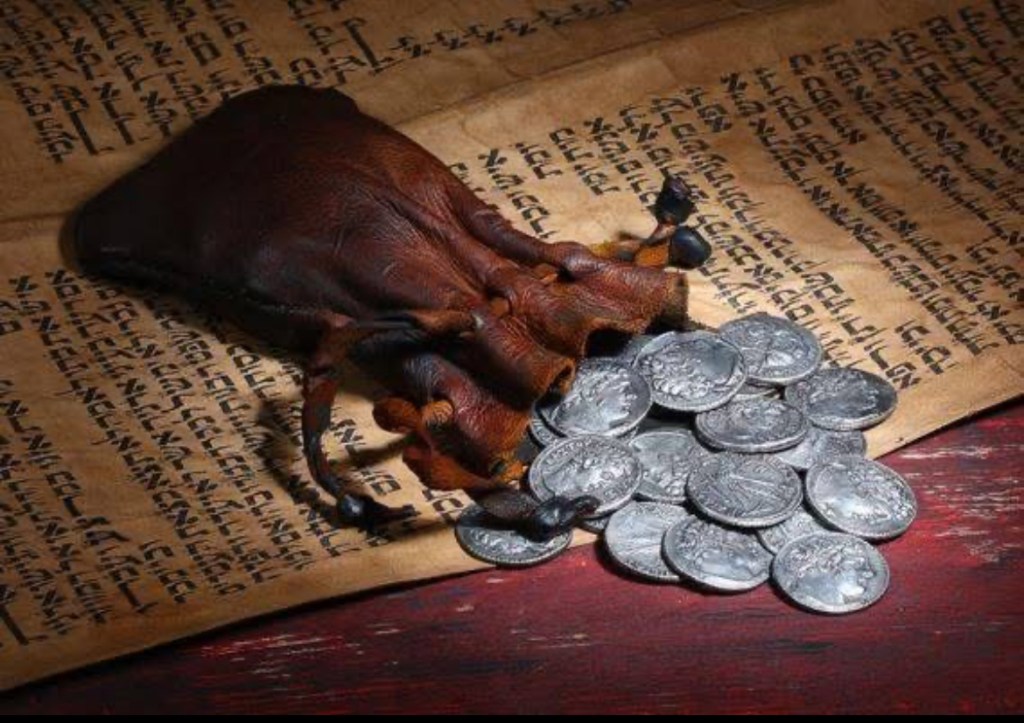
A gut-wrenching part of Holy Week occurs when Judas, one of the twelve disciples, sold Jesus out for thirty pieces of silver. Sold Him to those who wanted Him dead.

Judas had been with Jesus for three years. He was part of the group of twelve who followed Christ all over the countryside, learning from Him, observing miracles, seeing lives transformed. Wouldn’t you think that after all that time together Judas would have a deep, intimate relationship with Jesus? A relationship built on trust? A relationship that would mean more than a handful of coins?

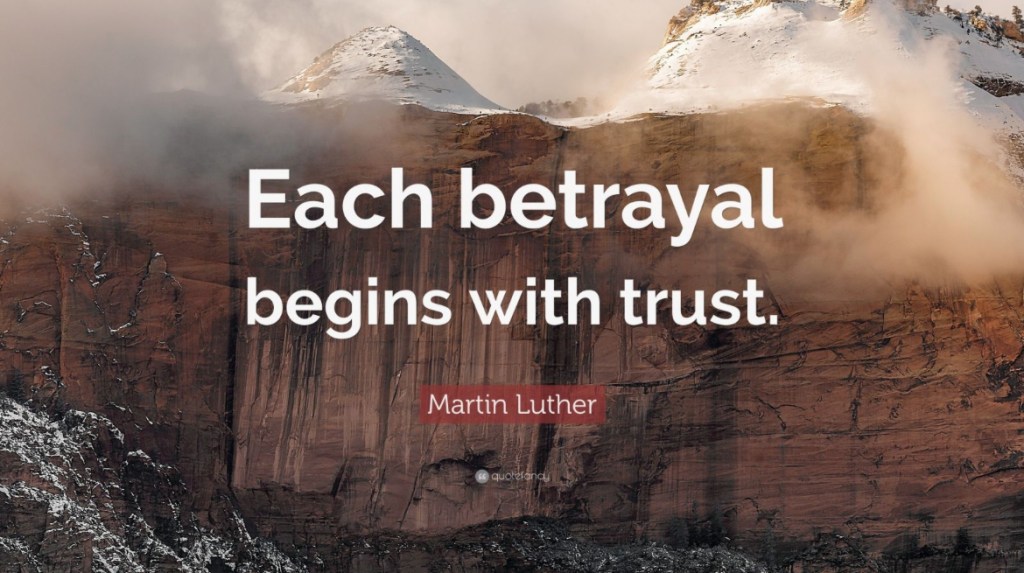
Trust is the foundation of any relationship. But when that trust is broken, when one is betrayed the results are devastating.

Sadly, our world is filled with the aftermath of betrayal...

  • Marriages that end in divorce.
  • Friendships that dissolve.
  • Working relationships that disintegrate when one person does all the work but someone else gets the credit/recognition/a bonus.
  • Even our bodies betray us as we age: forgetfulness, sore/stiff joints, sagging muscles replace our once vibrant selves.
  • Some would feel the church has also betrayed them, citing hypocrisy and lack of authenticity as reasons to give up on anything related to God.

What a bleak picture!

How then do we cope? What can we learn from David’s words? From Judas’ example?

  • People let us down. They disappoint. They say and do things that affect us to the very core of our being.
  • Bad things happen. Heartache happens.
  • Life isn’t always fair.

The Psalm goes on to offer some advice, even though I must admit it sounds too simplistic:

“Cast your burden on the Lord, and He will sustain you…”

The reason this works is because — ultimately — vengeance isn’t ours to mete out, but rather is in God’s hands. That’s not much comfort when in the midst of betrayal, but the more I get to know God, the more I realize that He truly is Someone I can trust. He knows all that I go through… my hurts, my confusion, my struggles, and yes, my betrayals. He knows and understands because His only Son also went through the unspeakable pain of being betrayed.

Restlessness. Anguish. Fear. Trembling. Horror. Betrayal. Broken promises. Back-stabbing words.

Whatever you may be going through, no matter how deep the hurt, how raw the scars… may you find a glimmer of hope in knowing that you’re not alone. You’re seen. You’re heard. You’re loved by a Father who wants to heal your heartache, your brokenness. And somehow… may that encourage you to not give up.

And together, as we face whatever challenges life throws at us, may we have joy in the journey of this thing called “Life!”

No expiration date?!?

The expiration date on the partially used bag of milk powder in my pantry was no longer visible. Gulp! Sometime during the last ten years (gulp again!) I had evidently deemed this a necessary purchase… and so put it in an airtight container to keep it fresh (ha! ha!)… and then obviously forgot about it. I only discovered the well-concealed bag this morning, much to my chagrin.

Expired. No longer able to be used. Worthless. Cast aside.

I came across an interesting, somewhat-concealed tidbit a few hours later. This time, I wasn’t in the kitchen but rather reading the Old Testament book of Numbers. The theme of the book is the gradual fulfillment of the promises to Abraham that his descendants would be the people of God and occupy the land of Canaan. 1 It begins with Israel preparing to leave the wilderness of Sinai, and then follows their journey — giving important instructions, but also recording where they messed up so that future generations could learn (hopefully!) from their mistakes. They, as a people, were called to represent God to the nations around them, which meant they needed to pay special attention to His instructions.

I’m still in the part of the story where this huge group of people (over 600,000 — and that’s only counting men from 20 years old and upward) is preparing to travel by foot from Egypt to the Promised Land (what we refer to today as Israel). They’ve already faced some obstacles, some detours… but what I found interesting this morning was regarding the Levites.

The Levites were descendants of the Hebrew tribe of Levi. They were given a very specific role: to assist the priests in worship and to transport all the “stuff” involved in setting up and breaking down a portable “Tent of Meeting” or “Tablernacle.” A LOT of details enumerate their duties — trust me! But what surprised me was that God even gave instructions regarding their retirement.

“… Levites from twenty-five years old and upward… shall enter to perform service in the work of the Tent of Meeting, but at the age of fifty years they shall retire from the service of the [Tabernacle] and serve no longer. They may assist their brothers in the Tent of Meeting by keeping guard, but they shall do no [heavy or difficult] work.” (Numbers 8:23-26)

They HAD to retire. At the age of 50!!!

But… that didn’t mean they were no longer able to be used. Worthless. Cast aside.

On the contrary! Instead of feeling like this was some sort of “putting out to pasture” mandate, it was actually communicating some important truths:

  • Transporting the Tabernacle, setting it up in a new location, breaking it down for the next move was back-breaking, heavy work. “Early retirement” meant that these men could graciously bow out from this physically demanding job and let the younger men flex THEIR muscles.
  • They still had an important role to play: that of keeping guard. Why was that so important? The Tabernacle was an opulent traveling “tent.” It housed precious objects — a lampstand made of pure gold, a table overlaid with gold, a special wooden chest also covered with gold, various other objects also from gold. The curtains, outer covering to protect it from the elements… everything was of the very best quality and workmanship. These needed protection.
  • The Levites also camped around the tabernacle so that “there may be no wrath on the congregation of the people of Israel.” God was very specific about who could and could not enter the Tabernacle. To do so unauthorized would mean instant death… and so the job of the over-50 crowd was vitally important to the well-being of the entire nation. They were not being marginalized by their new job-description… they were doing something worthwhile. Necessary. Valued.

Age is the great equalizer. We all eventually succumb to how it ravages our bodies as they begin to slow down and wear out. Our roles in life, in our society may change as we get older… but we never really retire!

Each season of life has its challenges, and with that our abilities and limitations may change. But we never are — like my milk powder — expired. No longer able to be used. Worthless. Cast aside.

No matter what season of life you find yourself in now — newly graduated, eager to continue with higher education or start a new job; recently married and figuring out how two lives can mesh with the least amount of conflict; starting your family or adjusting to an empty nest; preparing for retirement and the unknowns that accompany it — remember that you are ALWAYS able to be used! ALWAYS of great worth! NEVER cast aside!

May we also remember that God ALWAYS has something of value for us to do. We never retire — just change jobs. We may need to remind each other from time to time that we have no expiration date from God’s point of view! And as we do that, may we have joy in the journey of this thing called “Life!”

  1. ESV Bible Study Notes: Numbers ↩︎

EARTHQUAKE!!!

drawing credit: lizadonnelly.substack.com

I thought I was imagining it … I was sitting at my desk in our fifth floor apartment when I started sensing that my chair was moving. My husband, only a few feet away, didn’t notice anything. But then the rocking chair started swaying, as did the trees outside. The movement intensified, as did my fears. Later, we learned the earthquake only lasted a couple of minutes. Minutes that seemed to last forever.

I frantically tried to call our two kids to tell them how much I love them — in case we were goners. Yes, I was that scared! The call didn’t go through for who knows what reason — internet signals messed up? God’s intervention so that I didn’t freak out our kids?!

We then took the stairway down to the parking area where tenants from our twin eight-story buildings had gathered. One woman was crying. Others were huddled together. All of us in shock. Our good friends from Japan — “pros” living with earthquakes — encouraged and calmed us. Gave us helpful hints on what to do if this ever happens again.

When it was deemed safe to go back in the building, we took the stairs back to our apartment. At least we had remembered when exiting and returning to our home that it would be best to avoid the elevators!

We then discovered that the quake had literally shaken some things up in our apartment. Our dresser drawers had opened. The sliding glass door on our balcony now had a gap of several inches instead of being tightly closed. Our desks had slid apart. A few books had fallen over.

Overall, however, our city fared well — especially compared to those who lived near the 7.7 magnitude epicenter (we’re 525 miles/845 km away). Oh, how we grieve with those who have lost loved ones in this tragedy. Unimaginable sorrow.

The following day I wrote in my journal:

The reality of our own mortality —
when thrust upon us in such a vivid way —
is sobering.

Intellectually, I know that my death will usher me
into the presence of the Lord —
and what could be more wonderful than that?!?

I also know that life here on earth
is only a small blip on the timeline of eternity.

But yesterday —
standing in our living room
not knowing if the three floors above us
would soon snuff out my life —

I didn’t want to see Jesus then!
I didn’t feel ready!

from my journal Saturday, March 29th

God graciously spared us. But this sobering incident has made me ask myself some questions:

  • Am I ready to meet God??? Why was I so hesitant???
  • Am I keeping short accounts regarding any sin in my life — confessing anything that is short-circuiting my relationship with God? Forgiving others? Forgiving myself?
  • Are there any relational issues I’m not dealing with/avoiding? Misunderstandings that need to be cleared up? Words that need to be spoken?
  • What about family and friends who aren’t yet believers?

I’ve also been pondering some things God says:

God is our refuge and strength,
a very present help in trouble.
Therefore we will not fear
though the earth gives way,
though the mountains be moved into the heart of the sea,
though its waters roar and foam,
though the mountains tremble at its swelling.
Psalm 46: 1-2

“Though the mountains be shaken
and the hills be removed,
yet My unfailing love for you
will NOT be shaken
nor My covenant of peace be removed,”
says the Lord,
who has compassion on you.
Isaiah 54: 10

Have no fear of sudden disaster…
for the Lord will be at your side…
Proverbs 3:25-26

“Sudden disasters” aren’t only acts of nature, like our recent earthquake. It can be a telephone call that brings devastating news. Or walking down the street in broad daylight and being mugged. Or returning from vacation and seeing that your home, all your earthly belongings have gone up in smoke — literally. Or having your job terminated from one day to the next. Or … the list goes on and on.

All of these “sudden disasters” shake us to the core of our being. Our stability is rattled — like having the rug pulled out from under our feet. Our confidence is flagging. Our hope often turns to despair. What we believe and what we’re experiencing collide — and make us question God.

Even though we have since been assured that our building was constructed according to a strict, earthquake-withstanding code, I recognize that I need to put my hope, my confidence in something, Someone greater. Something, Someone that will withstand the storms of life.

Anyone who listens to My teaching
and follows it is
wise,
like a person who builds a house on solid rock.
Though the rain comes in torrents
and the flood waters rise
and the winds beat against that house,
it won’t collapse
because it is built on bedrock.

But anyone who hears My teaching
and doesn’t obey it is
foolish,
like a person who builds a house on sand.
When the rains and floods come
and the winds beat against that house,
it will collapse
with a mighty crash.

Jesus speaking, Matthew 7:24-26

Yes, I was scared. Yes, we survived. And yes, as a Christ-follower I’m endeavoring to learn from this experience so that I’m better prepared to face whatever “sudden disasters” may come my way down the road.

My desire is to build upon and cling to the Rock, the One I call my Lord and Savior. May I encourage you to do the same… and together, no matter what surprises come our way in this life, we’ll have joy in the journey of this thing called “Life!”

“Befriend” faithfulness???

photo credit: Roxhill Media

Have you ever read something so many times that you fail to actually SEE what is written?! That happened to me this morning as I was reading in the book of Psalms in the Old Testament of the Bible.

When I was a sophomore at university, new to the Christian faith, my friend Cheryl encouraged me to read five Psalms and one Proverb each day. That meant I would read both books once a month, a practice that I maintained for decades. It was the foundation of my “Quiet Time,” a daily time set aside for Bible reading and study, prayer, and sometimes journaling. (Yes, the writing bug bit me a LONG time ago!)

So this morning, as I read Psalm 37, something jumped out that I had never seen before.

Trust in the Lord, and do good;
dwell in the land and
BEFRIEND faithfulness.
or
… CULTIVATE faithfulness.

Psalm 37: 3 (ESV, NASB)
  • Take the initiative in getting to know others, which often means going where they are — finding where they hang out, what their interests are.
  • Come alongside them to share their burdens, their victories and defeats, their joys and sorrows.
  • Listen well to “hear” their hearts.
  • Be willing to invest time, effort in others.

I also asked myself what CULTIVATING looks like. I grew up in the countryside. My dad always planted a large vegetable garden so that we would have fresh corn, tomatoes, green beans, and peas all summer long. But to harvest the crops took a LOT of work:

  • The soil first needed to be cleaned up: cornstalks and other vines removed.
  • Then the soil was “tilled,” broken up after having lain dormant since the previous growing season. This step was crucial to improve aeration of the soil as well as enhancing water infiltration.
  • Only then was it possible to begin planting seeds for the new crops.
  • Then they needed to be watered, weeded.
  • Sunshine helped with their growth, but we had to be ever vigilant of “critters” that may have viewed our potential harvest as THEIR feeding ground!
  • After waiting — letting nature take its course — we reaped the bounty of our efforts!

BEFRIEND faithfulness. CULTIVATE faithfulness.

So… how do befriending and cultivating apply to faithfulness???

Faithfulness is a quality grounded in the character of God. His very nature is to be faithful: dependable, loyal, constant, true, unswerving, trustworthy.

If I, then, am encouraged to befriend, to cultivate faithfulness I need to:

  • Take the initiative, be intentional in focusing my attention on God and others who are faithful.
  • Come alongside and embrace that which is true, faithful. That which reflects and represents what God is like.
  • The above happen by hanging out with other like-minded followers of Christ; by choosing what I allow my mind to “feed” on, be it the books I read, the TV shows I watch, the social media I interact with, the conversations I engage in.
  • Realize that there is a “cost” involved… and often the “cost” is time.
  • If I’m going to harvest a good crop of faithfulness I also need to be ruthless in preparing the soil of my heart, my mind. I need to break up any stubborn clods of soil that are hindering God and His Word from penetrating my heart.
  • I also need to get rid of weeds — regularly! Get rid of those things that entangle my thoughts, sap my energy, stunt my growth. And just as weeding the garden isn’t a one-time deal, neither is “weeding” the gunk in my life that needs to be dealt with.
  • Faithfulness grows as it’s watered, fed, nurtured. It happens progressively — not all at once. It takes time. The water and food that grow my faith are God and His Word. No-brainer, right?!? And yet sometimes, I want the finished crop without embracing the process.

Befriend faithfulness. Cultivate faithfulness. May we encourage one another in this life-long process, and together have joy in the journey of this thing called “Life!”

Decisions, decisions, decisions…

I not-so-affectionately refer to it as our “trifecta.” Several major decisions all converged upon our lives around the same time. Decisions that have interrupted our lives. Decisions that have robbed me of sleep. Decisions that have fostered hours of conversation with my husband, which is a wonderful fringe benefit, by the way!

We seem to have our best talks while walking, and so the past weeks we’ve been up early to beat the tropical heat (it’s now summer here in Thailand, our “hot season”). We’ve walked round and round a nearby housing development… and we’ve gone round and round in our thinking.

Not my favorite place to be.

I’m not a fan of ambiguity. I don’t like it when my secure little world gets rattled. I prefer having all my ducks in a row. ALL the time.

But life’s not like that.

This latest “trifecta” has forced me to reexamine the things I say I believe and hold fast to. It also reminded me that I blogged about this a few years ago (see link below). Gulp! Guess I’m still needing to learn some things about decision making.

God’s Word (aka the Bible) usually doesn’t spell out the answers to our decision-making questions in black and white, but it does give some helpful hints for us to discern what to do. After all, He’s a good Father. The perfect Father. And He wants us, His kids, to grow up. To learn to use our brains and good sense. Our part is to listen, to act in faith — not in ourselves, but in Him.

Trust God from the bottom of your heart; don’t try to figure out everything on your own. Listen for God’s voice in everything you do, everywhere you go; He’s the one who will keep you on track.

Proverbs 3:5-6 (MSG)

“For I know the plans and thoughts that I have for you,” says the Lord, “plans for peace and well-being and not for disaster to give you a future and a hope.”

Jeremiah 29:11 (AMP)

You will keep in perfect peace all who trust in You, all whose thoughts are fixed on You!

Isaiah 26:3 (NLT)

Trust. Don’t try to figure everything out on your own. Listen. Keep your thoughts on God.

Easier said than done!

My default decision-making setting is to try to figure everything out myself. Ask advice of others — sometimes. Stew. Substitute activity/busyness for being quiet. For listening to God. All of which is a recipe for becoming anxious, feeling overwhelmed, being fearful. NOT at all what God promises.

So… where are my husband and I in our current “trifecta”?

We’re intentionally listening a LOT… to each other and to God. We’re seeking advice from others. We’re gathering information so that, at least as far as is humanly possible, we know the facts, the options before us. And ultimately, we’re trusting that God will make things clear. In HIS timing, which often is different from ours. We’re trusting that He, as a good Father, isn’t playing games with us. After all, He sees the big picture and is aware of factors that aren’t even on our radar.

Yep. Sometimes it’s hard to know how to navigate the decisions of life. But may we encourage one another to trust. To not try figuring everything out on our own. To listen to and keep our thoughts on God. And as we do so, may we have joy in the journey of this thing called “Life!”

Tambourine-toting influencer…

artwork by Mary Therese Streck

Miriam was the big sister. Her younger brothers, Aaron and Moses, were key players in what is referred to as the “Exodus,” an event that took place a LONG time ago..

The children of Israel found themselves in Egypt… as slaves. (How they got there is another story. For another blog.) Moses was tasked with leading the people — 600,000 men and an additional who-knows-exactly-how-many women and children — to the “Promised Land,” a land described as flowing with milk and honey.

The ruler of Egypt at the time kept flip-flopping in giving them permission to leave. As slaves, the Israelites played a vital role in the building of his empire. Losing such a large work force would have serious repercussions for the entire nation. And so God resorted to drastic measures to force the king’s hand in letting the people go.

A series of plagues finally persuaded the king — Pharaoh — to relent. I must admit — the plagues were pretty horrible. First, all the water of the Nile River was turned to blood. Then frogs were found everywhere: in their bedrooms, on their beds, in their ovens and kneading bowls. After that, the dust of the earth turned into gnats, gnats that annoyed both man and animal. And then swarms of flies were everywhere. If I had been Pharaoh, I think I would’ve been having second thoughts by this time!

But no. It kept getting worse. All the livestock of the Egyptians — horses, donkeys, camels, herds, flocks — died. Ironically, the livestock of the Israelites wasn’t touched. Then both man and animal broke out in painful boils. After that, the land was pelted with hail. It struck down everything that was in the field and in all the land of Egypt, affecting both man and animal. The next thing that happened was the land was stripped bare by locusts. Anything that had survived the hail storm was now completely decimated. What gives me the creeps is that the locusts were so thick you couldn’t see the ground… and they were in the houses! Ugh.

By now, don’t you think Pharaoh would’ve thrown up his hands and told the people to skedaddle?!? Nope. Another attempt to change his mind was covering the land with pitch darkness for three days. It was so dark that the Egyptians couldn’t see one another. They didn’t leave their homes during this time. But once again, the people of Israel fared differently: they had light where they lived.

The final plague was death: death of every firstborn in the land of Egypt, from the firstborn of Pharaoh to the firstborn of the servant girl to the firstborn of the cattle. The only way anyone could escape certain death was to paint the two doorposts and the lintel of one’s home with the blood of a freshly killed lamb, a lamb that was perfect, without blemish. A male lamb a year old. Those who adhered to this directive would be “passed over.” The plague would not touch them or their family. (This is where the Jewish Passover feast has its roots.)

And it happened. The worst nightmare anyone could imagine. ALL the firstborn in Egypt — from Pharaoh to the captive in the dungeon to the livestock — died. There was not a single house where someone was not dead — except those with the blood on their doorposts and lintel.

This was the straw that broke Pharaoh’s back.

In a whole series of remarkable events — the most significant being when God literally parted the waters of the Red Sea so the Israelites could walk through on dry ground, whereas Pharaoh and his army got swept away — they were finally free! Four hundred and thirty years of captivity. Four hundred and thirty years of slavery. OVER and DONE WITH!

To say they were happy, overjoyed is an understatement! They were ecstatic! If I had been there, I’m sure I would also have been jumping up and down for joy! Moses and the people, with hearts filled with joy and thanksgiving, sang a song to God recounting all that God had done on their behalf.

And then Moses’ big sister Miriam grabbed a tambourine and led the women in dancing and singing a song about the incredible events they had just witnessed.

I got to thinking about how old Miriam may have been when all this happened… The biblical account says that Moses was 80 and Aaron 83, so she must’ve been around 85 or older.

Hmm…

One of the things I’m increasingly aware of as I grow older is how my capabilities and limitations keep changing as I go through different seasons of life. For example, when our children were toddlers, caring for them left little time for much outside activity. But as they grew, became more independent, and eventually left our home I had more time for outside interests and responsibilities.

Now, a few decades later, I can look back on a myriad of life experiences that have helped me become the woman I am today. I may not have the energy that I had when I was in my 20’s and 30’s, but (hopefully!) I’ve grown in wisdom and character — the intangible “things” that are most important in life.

Which brings me back to Miriam. I want to be a tambourine-toting influencer of people for as long as I live! I don’t want to let age or energy-level or season of life or anything else hinder me from being the type of person who makes a difference in my corner of the world.

Every time I think of being a tambourine-toting influencer a smile creeps upon my face! And I get excited that God isn’t done with me yet! That I can continue loving and serving Him for the rest of my days.

Will you join me in the dance?! And together, we’ll have joy in the journey of this thing called “Life!”

Note: for more details, read Exodus chapters 1-15

Only half of the story…

photo credit: nobleworkscards.com

Louis Armstrong was an American jazz musician back in the 1920’s. A few decades later he had become an international musical icon. Affectionally nicknamed Satchmo (or Satch) and Pops, his rendition of “Go Down Moses” popped into my head this morning.

When Israel was in Egypt land
(let my people go)
Oppressed so hard they could not stand
(let my people go)
So the Lord said, “Go down Moses,
way down in Egypt land.
Tell old Pharaoh to let my people go.”

lyrics from “Go Down Moses”

I was reading in one of the early books of the Old Testament, the book of Exodus. The Israelites, who had been living in Egypt for 430 years, were languishing in that land. They were ruthlessly made to work as slaves. They were dealt with shrewdly by taskmasters who afflicted them with heavy burdens. They were oppressed. If anyone had reason to want out of a bad situation, these people had multiple reasons. If anyone had reason to wonder if God had forgotten them, these people had ample opportunities to question His presence, His care.

But God did hear their groaning. He remembered that He had made an agreement with their forefathers that this nation would represent Him to the world, that they would be His people. He saw their situation. He knew their pain.

And so God put into motion a plan to rescue His people. To save them. A plan that involved a somewhat reluctant leader, Moses.

Moses was tasked with going to Pharaoh — the King of Egypt — to relay God’s message:

“Let My people go,
that they may serve Me…”

God’s words to Pharaoh,
as communicated by Moses in Exodus 7:16 and other verses

Louis Armstrong’s song only tells half of the story. The popular spiritual neglects the other half of the story, the most important part.

The reason God wanted Pharaoh to let My people go was so that they may serve Me. Not that they would be rescued from a hostile environment (which did, indeed, happen). Not that they would have another leader (instead of the oppressive Pharaoh). Not that their lives would be better, easier, more “normal.”

Hmm… how does this relate to me?!?

When I was a university student, I became a Christ-follower by putting my faith and trust in the Son of God. I was “saved,” as the vernacular puts it, from having to pay the penalty for my sin — attitudes, actions, thoughts that go against God’s standards — myself. Jesus paid the penalty for me through His death.

Reading about Moses, the Israelites, and Pharaoh reminded me that I have been saved to serve God. Ultimately, that’s my purpose here on planet Earth. Anything else is a fringe benefit, so to speak.

There are a lot of ways that each Christ-follower serves God:

  • by loving others in the same way Christ loves us — not just pretending to love, but loving unconditionally, with genuine affection
  • by holding tightly to what is good
  • by hating what is wrong
  • by showing honor to one another
  • by helping those in need
  • by praying for our leaders
  • by blessing those who persecute us instead of cursing them
  • by being happy with those who are happy… and weeping with those who weep
  • by doing all that we can to live in peace with everyone
  • …. and the list goes on and on!

But in addition to these things — which I’m constantly working on! somedays I do better than others!– how do I serve Him? What is God’s particular assignment for me?

For we are God’s masterpiece.
He has created us anew in Christ Jesus,
so we can do the good things He planned for us long ago.

Ephesians 2:10

God has wired each of us differently. We each have unique ways that we process and relate to our world and to others. We each have different talents and abilities. Different seasons of life cause us to evaluate our capabilities and limitations — and to make mid-course corrections, if necessary. And yet it’s important to not lose sight of the most important thing:

… that I may serve Him…

May we encourage one another to keep serving God our focus, and together, may we have joy in the journey of this thing called “Life!”

What’s in a name…

It was a “thing” back in third grade… having autograph books. One of my classmates simply signed her name and “Proverbs 22:1.” I remember not having a clue back then what that was referring to, let alone why she would chose to sign her autograph in such a cryptic way.

A “good name” is synonymous with having a good reputation. Aha! That helps shed light on what my third-grade classmate wrote. One’s reputation definitely is of the highest value. Definitely worth pursuing above all else!

Daniel was a young man who lived centuries ago. His homeland had been invaded and he, along with three friends, was taken captive by the enemy. These young men were from the royal family and nobility. They were described as “youths without blemish, of good appearance and skillful in all wisdom, endowed with understanding and discerning knowledge, and had the ability to serve in the king’s court.” They were the cream of the crop, so to speak.

And yet they found themselves in a foreign country, a country that didn’t honor the God they honored and worshiped. They were given an ultimatum: to be taught the literature and language of their captors, to eat the same food and drink the same wine as the King, to be educated for three years… and THEN to stand before the King.

Only problem… Daniel felt that eating the King’s food and drinking his wine would dishonor, taint himself. And so he asked his captors for permission to NOT eat and drink these unacceptable foods and beverages. He resolved to not defile himself.

He and his three buddies found favor and compassion in the sight of the man assigned to carry out the King’s edict. Disobeying the King’s edict could have serious repercussions: it could endanger this man’s life. And so Daniel suggested a compromise: give him and his friends only water and vegetables for ten days, and then see how they compared to other young men who were also “in training” but who were eating the King’s fare.

Amazingly, at the end of the ten days Daniel and his friends were “better in appearance and fatter in flesh than all the youths who ate the King’s food.”

Seems like a minor thing, an insignificant/inconsequential thing. I mean really — how bad could the King’s wine and food be?!? But for these young men, choosing to do the right thing, to not violate their consciences was more important than any unpleasant consequences, regardless of what they may be.

As the story goes on, the value of that initial decision plays out as Daniel and his friends end up having a significant role in representing God in their new environment. Daniel is recognized and appreciated for his leadership. The King himself said the “the spirit of the gods is in you, and that light and understanding and excellent wisdom are found in you.”

A good name. A good reputation. Of more value than great wealth.

Hmm… how does this relate to me?

  • What am I doing — or NOT doing — that is enhancing God’s reputation where I am living? or hindering it?
  • What are the little things that trip me up?
  • How does what I see in the news, on social media influence my choices? And what role does the opinion of others play?
  • As a Christ follower, how might those I interact with describe the God I represent and serve?
  • If I were to write in someone’s autograph book today, what message would I want to communicate?

I’m not in third grade anymore, but I’m still learning, still striving to rightly represent Jesus in this world in which I — in which you and I — live. May God give us the grace and fortitude to be like Daniel… and together to have joy in the journey of this thing called “Life!”

Note: to read more about Daniel and his friends, check out the book of Daniel in the Old Testament of the Bible.