No expiration date?!?

The expiration date on the partially used bag of milk powder in my pantry was no longer visible. Gulp! Sometime during the last ten years (gulp again!) I had evidently deemed this a necessary purchase… and so put it in an airtight container to keep it fresh (ha! ha!)… and then obviously forgot about it. I only discovered the well-concealed bag this morning, much to my chagrin.

Expired. No longer able to be used. Worthless. Cast aside.

I came across an interesting, somewhat-concealed tidbit a few hours later. This time, I wasn’t in the kitchen but rather reading the Old Testament book of Numbers. The theme of the book is the gradual fulfillment of the promises to Abraham that his descendants would be the people of God and occupy the land of Canaan. 1 It begins with Israel preparing to leave the wilderness of Sinai, and then follows their journey — giving important instructions, but also recording where they messed up so that future generations could learn (hopefully!) from their mistakes. They, as a people, were called to represent God to the nations around them, which meant they needed to pay special attention to His instructions.

I’m still in the part of the story where this huge group of people (over 600,000 — and that’s only counting men from 20 years old and upward) is preparing to travel by foot from Egypt to the Promised Land (what we refer to today as Israel). They’ve already faced some obstacles, some detours… but what I found interesting this morning was regarding the Levites.

The Levites were descendants of the Hebrew tribe of Levi. They were given a very specific role: to assist the priests in worship and to transport all the “stuff” involved in setting up and breaking down a portable “Tent of Meeting” or “Tablernacle.” A LOT of details enumerate their duties — trust me! But what surprised me was that God even gave instructions regarding their retirement.

“… Levites from twenty-five years old and upward… shall enter to perform service in the work of the Tent of Meeting, but at the age of fifty years they shall retire from the service of the [Tabernacle] and serve no longer. They may assist their brothers in the Tent of Meeting by keeping guard, but they shall do no [heavy or difficult] work.” (Numbers 8:23-26)

They HAD to retire. At the age of 50!!!

But… that didn’t mean they were no longer able to be used. Worthless. Cast aside.

On the contrary! Instead of feeling like this was some sort of “putting out to pasture” mandate, it was actually communicating some important truths:

  • Transporting the Tabernacle, setting it up in a new location, breaking it down for the next move was back-breaking, heavy work. “Early retirement” meant that these men could graciously bow out from this physically demanding job and let the younger men flex THEIR muscles.
  • They still had an important role to play: that of keeping guard. Why was that so important? The Tabernacle was an opulent traveling “tent.” It housed precious objects — a lampstand made of pure gold, a table overlaid with gold, a special wooden chest also covered with gold, various other objects also from gold. The curtains, outer covering to protect it from the elements… everything was of the very best quality and workmanship. These needed protection.
  • The Levites also camped around the tabernacle so that “there may be no wrath on the congregation of the people of Israel.” God was very specific about who could and could not enter the Tabernacle. To do so unauthorized would mean instant death… and so the job of the over-50 crowd was vitally important to the well-being of the entire nation. They were not being marginalized by their new job-description… they were doing something worthwhile. Necessary. Valued.

Age is the great equalizer. We all eventually succumb to how it ravages our bodies as they begin to slow down and wear out. Our roles in life, in our society may change as we get older… but we never really retire!

Each season of life has its challenges, and with that our abilities and limitations may change. But we never are — like my milk powder — expired. No longer able to be used. Worthless. Cast aside.

No matter what season of life you find yourself in now — newly graduated, eager to continue with higher education or start a new job; recently married and figuring out how two lives can mesh with the least amount of conflict; starting your family or adjusting to an empty nest; preparing for retirement and the unknowns that accompany it — remember that you are ALWAYS able to be used! ALWAYS of great worth! NEVER cast aside!

May we also remember that God ALWAYS has something of value for us to do. We never retire — just change jobs. We may need to remind each other from time to time that we have no expiration date from God’s point of view! And as we do that, may we have joy in the journey of this thing called “Life!”

  1. ESV Bible Study Notes: Numbers ↩︎

EARTHQUAKE!!!

drawing credit: lizadonnelly.substack.com

I thought I was imagining it … I was sitting at my desk in our fifth floor apartment when I started sensing that my chair was moving. My husband, only a few feet away, didn’t notice anything. But then the rocking chair started swaying, as did the trees outside. The movement intensified, as did my fears. Later, we learned the earthquake only lasted a couple of minutes. Minutes that seemed to last forever.

I frantically tried to call our two kids to tell them how much I love them — in case we were goners. Yes, I was that scared! The call didn’t go through for who knows what reason — internet signals messed up? God’s intervention so that I didn’t freak out our kids?!

We then took the stairway down to the parking area where tenants from our twin eight-story buildings had gathered. One woman was crying. Others were huddled together. All of us in shock. Our good friends from Japan — “pros” living with earthquakes — encouraged and calmed us. Gave us helpful hints on what to do if this ever happens again.

When it was deemed safe to go back in the building, we took the stairs back to our apartment. At least we had remembered when exiting and returning to our home that it would be best to avoid the elevators!

We then discovered that the quake had literally shaken some things up in our apartment. Our dresser drawers had opened. The sliding glass door on our balcony now had a gap of several inches instead of being tightly closed. Our desks had slid apart. A few books had fallen over.

Overall, however, our city fared well — especially compared to those who lived near the 7.7 magnitude epicenter (we’re 525 miles/845 km away). Oh, how we grieve with those who have lost loved ones in this tragedy. Unimaginable sorrow.

The following day I wrote in my journal:

The reality of our own mortality —
when thrust upon us in such a vivid way —
is sobering.

Intellectually, I know that my death will usher me
into the presence of the Lord —
and what could be more wonderful than that?!?

I also know that life here on earth
is only a small blip on the timeline of eternity.

But yesterday —
standing in our living room
not knowing if the three floors above us
would soon snuff out my life —

I didn’t want to see Jesus then!
I didn’t feel ready!

from my journal Saturday, March 29th

God graciously spared us. But this sobering incident has made me ask myself some questions:

  • Am I ready to meet God??? Why was I so hesitant???
  • Am I keeping short accounts regarding any sin in my life — confessing anything that is short-circuiting my relationship with God? Forgiving others? Forgiving myself?
  • Are there any relational issues I’m not dealing with/avoiding? Misunderstandings that need to be cleared up? Words that need to be spoken?
  • What about family and friends who aren’t yet believers?

I’ve also been pondering some things God says:

God is our refuge and strength,
a very present help in trouble.
Therefore we will not fear
though the earth gives way,
though the mountains be moved into the heart of the sea,
though its waters roar and foam,
though the mountains tremble at its swelling.
Psalm 46: 1-2

“Though the mountains be shaken
and the hills be removed,
yet My unfailing love for you
will NOT be shaken
nor My covenant of peace be removed,”
says the Lord,
who has compassion on you.
Isaiah 54: 10

Have no fear of sudden disaster…
for the Lord will be at your side…
Proverbs 3:25-26

“Sudden disasters” aren’t only acts of nature, like our recent earthquake. It can be a telephone call that brings devastating news. Or walking down the street in broad daylight and being mugged. Or returning from vacation and seeing that your home, all your earthly belongings have gone up in smoke — literally. Or having your job terminated from one day to the next. Or … the list goes on and on.

All of these “sudden disasters” shake us to the core of our being. Our stability is rattled — like having the rug pulled out from under our feet. Our confidence is flagging. Our hope often turns to despair. What we believe and what we’re experiencing collide — and make us question God.

Even though we have since been assured that our building was constructed according to a strict, earthquake-withstanding code, I recognize that I need to put my hope, my confidence in something, Someone greater. Something, Someone that will withstand the storms of life.

Anyone who listens to My teaching
and follows it is
wise,
like a person who builds a house on solid rock.
Though the rain comes in torrents
and the flood waters rise
and the winds beat against that house,
it won’t collapse
because it is built on bedrock.

But anyone who hears My teaching
and doesn’t obey it is
foolish,
like a person who builds a house on sand.
When the rains and floods come
and the winds beat against that house,
it will collapse
with a mighty crash.

Jesus speaking, Matthew 7:24-26

Yes, I was scared. Yes, we survived. And yes, as a Christ-follower I’m endeavoring to learn from this experience so that I’m better prepared to face whatever “sudden disasters” may come my way down the road.

My desire is to build upon and cling to the Rock, the One I call my Lord and Savior. May I encourage you to do the same… and together, no matter what surprises come our way in this life, we’ll have joy in the journey of this thing called “Life!”

“Befriend” faithfulness???

photo credit: Roxhill Media

Have you ever read something so many times that you fail to actually SEE what is written?! That happened to me this morning as I was reading in the book of Psalms in the Old Testament of the Bible.

When I was a sophomore at university, new to the Christian faith, my friend Cheryl encouraged me to read five Psalms and one Proverb each day. That meant I would read both books once a month, a practice that I maintained for decades. It was the foundation of my “Quiet Time,” a daily time set aside for Bible reading and study, prayer, and sometimes journaling. (Yes, the writing bug bit me a LONG time ago!)

So this morning, as I read Psalm 37, something jumped out that I had never seen before.

Trust in the Lord, and do good;
dwell in the land and
BEFRIEND faithfulness.
or
… CULTIVATE faithfulness.

Psalm 37: 3 (ESV, NASB)
  • Take the initiative in getting to know others, which often means going where they are — finding where they hang out, what their interests are.
  • Come alongside them to share their burdens, their victories and defeats, their joys and sorrows.
  • Listen well to “hear” their hearts.
  • Be willing to invest time, effort in others.

I also asked myself what CULTIVATING looks like. I grew up in the countryside. My dad always planted a large vegetable garden so that we would have fresh corn, tomatoes, green beans, and peas all summer long. But to harvest the crops took a LOT of work:

  • The soil first needed to be cleaned up: cornstalks and other vines removed.
  • Then the soil was “tilled,” broken up after having lain dormant since the previous growing season. This step was crucial to improve aeration of the soil as well as enhancing water infiltration.
  • Only then was it possible to begin planting seeds for the new crops.
  • Then they needed to be watered, weeded.
  • Sunshine helped with their growth, but we had to be ever vigilant of “critters” that may have viewed our potential harvest as THEIR feeding ground!
  • After waiting — letting nature take its course — we reaped the bounty of our efforts!

BEFRIEND faithfulness. CULTIVATE faithfulness.

So… how do befriending and cultivating apply to faithfulness???

Faithfulness is a quality grounded in the character of God. His very nature is to be faithful: dependable, loyal, constant, true, unswerving, trustworthy.

If I, then, am encouraged to befriend, to cultivate faithfulness I need to:

  • Take the initiative, be intentional in focusing my attention on God and others who are faithful.
  • Come alongside and embrace that which is true, faithful. That which reflects and represents what God is like.
  • The above happen by hanging out with other like-minded followers of Christ; by choosing what I allow my mind to “feed” on, be it the books I read, the TV shows I watch, the social media I interact with, the conversations I engage in.
  • Realize that there is a “cost” involved… and often the “cost” is time.
  • If I’m going to harvest a good crop of faithfulness I also need to be ruthless in preparing the soil of my heart, my mind. I need to break up any stubborn clods of soil that are hindering God and His Word from penetrating my heart.
  • I also need to get rid of weeds — regularly! Get rid of those things that entangle my thoughts, sap my energy, stunt my growth. And just as weeding the garden isn’t a one-time deal, neither is “weeding” the gunk in my life that needs to be dealt with.
  • Faithfulness grows as it’s watered, fed, nurtured. It happens progressively — not all at once. It takes time. The water and food that grow my faith are God and His Word. No-brainer, right?!? And yet sometimes, I want the finished crop without embracing the process.

Befriend faithfulness. Cultivate faithfulness. May we encourage one another in this life-long process, and together have joy in the journey of this thing called “Life!”

Tambourine-toting influencer…

artwork by Mary Therese Streck

Miriam was the big sister. Her younger brothers, Aaron and Moses, were key players in what is referred to as the “Exodus,” an event that took place a LONG time ago..

The children of Israel found themselves in Egypt… as slaves. (How they got there is another story. For another blog.) Moses was tasked with leading the people — 600,000 men and an additional who-knows-exactly-how-many women and children — to the “Promised Land,” a land described as flowing with milk and honey.

The ruler of Egypt at the time kept flip-flopping in giving them permission to leave. As slaves, the Israelites played a vital role in the building of his empire. Losing such a large work force would have serious repercussions for the entire nation. And so God resorted to drastic measures to force the king’s hand in letting the people go.

A series of plagues finally persuaded the king — Pharaoh — to relent. I must admit — the plagues were pretty horrible. First, all the water of the Nile River was turned to blood. Then frogs were found everywhere: in their bedrooms, on their beds, in their ovens and kneading bowls. After that, the dust of the earth turned into gnats, gnats that annoyed both man and animal. And then swarms of flies were everywhere. If I had been Pharaoh, I think I would’ve been having second thoughts by this time!

But no. It kept getting worse. All the livestock of the Egyptians — horses, donkeys, camels, herds, flocks — died. Ironically, the livestock of the Israelites wasn’t touched. Then both man and animal broke out in painful boils. After that, the land was pelted with hail. It struck down everything that was in the field and in all the land of Egypt, affecting both man and animal. The next thing that happened was the land was stripped bare by locusts. Anything that had survived the hail storm was now completely decimated. What gives me the creeps is that the locusts were so thick you couldn’t see the ground… and they were in the houses! Ugh.

By now, don’t you think Pharaoh would’ve thrown up his hands and told the people to skedaddle?!? Nope. Another attempt to change his mind was covering the land with pitch darkness for three days. It was so dark that the Egyptians couldn’t see one another. They didn’t leave their homes during this time. But once again, the people of Israel fared differently: they had light where they lived.

The final plague was death: death of every firstborn in the land of Egypt, from the firstborn of Pharaoh to the firstborn of the servant girl to the firstborn of the cattle. The only way anyone could escape certain death was to paint the two doorposts and the lintel of one’s home with the blood of a freshly killed lamb, a lamb that was perfect, without blemish. A male lamb a year old. Those who adhered to this directive would be “passed over.” The plague would not touch them or their family. (This is where the Jewish Passover feast has its roots.)

And it happened. The worst nightmare anyone could imagine. ALL the firstborn in Egypt — from Pharaoh to the captive in the dungeon to the livestock — died. There was not a single house where someone was not dead — except those with the blood on their doorposts and lintel.

This was the straw that broke Pharaoh’s back.

In a whole series of remarkable events — the most significant being when God literally parted the waters of the Red Sea so the Israelites could walk through on dry ground, whereas Pharaoh and his army got swept away — they were finally free! Four hundred and thirty years of captivity. Four hundred and thirty years of slavery. OVER and DONE WITH!

To say they were happy, overjoyed is an understatement! They were ecstatic! If I had been there, I’m sure I would also have been jumping up and down for joy! Moses and the people, with hearts filled with joy and thanksgiving, sang a song to God recounting all that God had done on their behalf.

And then Moses’ big sister Miriam grabbed a tambourine and led the women in dancing and singing a song about the incredible events they had just witnessed.

I got to thinking about how old Miriam may have been when all this happened… The biblical account says that Moses was 80 and Aaron 83, so she must’ve been around 85 or older.

Hmm…

One of the things I’m increasingly aware of as I grow older is how my capabilities and limitations keep changing as I go through different seasons of life. For example, when our children were toddlers, caring for them left little time for much outside activity. But as they grew, became more independent, and eventually left our home I had more time for outside interests and responsibilities.

Now, a few decades later, I can look back on a myriad of life experiences that have helped me become the woman I am today. I may not have the energy that I had when I was in my 20’s and 30’s, but (hopefully!) I’ve grown in wisdom and character — the intangible “things” that are most important in life.

Which brings me back to Miriam. I want to be a tambourine-toting influencer of people for as long as I live! I don’t want to let age or energy-level or season of life or anything else hinder me from being the type of person who makes a difference in my corner of the world.

Every time I think of being a tambourine-toting influencer a smile creeps upon my face! And I get excited that God isn’t done with me yet! That I can continue loving and serving Him for the rest of my days.

Will you join me in the dance?! And together, we’ll have joy in the journey of this thing called “Life!”

Note: for more details, read Exodus chapters 1-15

What’s in a name…

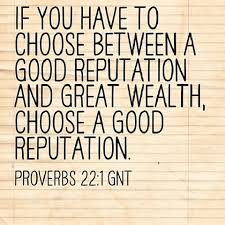
It was a “thing” back in third grade… having autograph books. One of my classmates simply signed her name and “Proverbs 22:1.” I remember not having a clue back then what that was referring to, let alone why she would chose to sign her autograph in such a cryptic way.

A “good name” is synonymous with having a good reputation. Aha! That helps shed light on what my third-grade classmate wrote. One’s reputation definitely is of the highest value. Definitely worth pursuing above all else!

Daniel was a young man who lived centuries ago. His homeland had been invaded and he, along with three friends, was taken captive by the enemy. These young men were from the royal family and nobility. They were described as “youths without blemish, of good appearance and skillful in all wisdom, endowed with understanding and discerning knowledge, and had the ability to serve in the king’s court.” They were the cream of the crop, so to speak.

And yet they found themselves in a foreign country, a country that didn’t honor the God they honored and worshiped. They were given an ultimatum: to be taught the literature and language of their captors, to eat the same food and drink the same wine as the King, to be educated for three years… and THEN to stand before the King.

Only problem… Daniel felt that eating the King’s food and drinking his wine would dishonor, taint himself. And so he asked his captors for permission to NOT eat and drink these unacceptable foods and beverages. He resolved to not defile himself.

He and his three buddies found favor and compassion in the sight of the man assigned to carry out the King’s edict. Disobeying the King’s edict could have serious repercussions: it could endanger this man’s life. And so Daniel suggested a compromise: give him and his friends only water and vegetables for ten days, and then see how they compared to other young men who were also “in training” but who were eating the King’s fare.

Amazingly, at the end of the ten days Daniel and his friends were “better in appearance and fatter in flesh than all the youths who ate the King’s food.”

Seems like a minor thing, an insignificant/inconsequential thing. I mean really — how bad could the King’s wine and food be?!? But for these young men, choosing to do the right thing, to not violate their consciences was more important than any unpleasant consequences, regardless of what they may be.

As the story goes on, the value of that initial decision plays out as Daniel and his friends end up having a significant role in representing God in their new environment. Daniel is recognized and appreciated for his leadership. The King himself said the “the spirit of the gods is in you, and that light and understanding and excellent wisdom are found in you.”

A good name. A good reputation. Of more value than great wealth.

Hmm… how does this relate to me?

  • What am I doing — or NOT doing — that is enhancing God’s reputation where I am living? or hindering it?
  • What are the little things that trip me up?
  • How does what I see in the news, on social media influence my choices? And what role does the opinion of others play?
  • As a Christ follower, how might those I interact with describe the God I represent and serve?
  • If I were to write in someone’s autograph book today, what message would I want to communicate?

I’m not in third grade anymore, but I’m still learning, still striving to rightly represent Jesus in this world in which I — in which you and I — live. May God give us the grace and fortitude to be like Daniel… and together to have joy in the journey of this thing called “Life!”
Note: to read more about Daniel and his friends, check out the book of Daniel in the Old Testament of the Bible.

Who??? Why???

I had never even met Jonathan. A good friend of mine, a teacher at his school, sent a text message saying

Prayers are appreciated for our GIS [Grace International School] community. A student passed away last night in a motorcycle accident.

17 years old. A high school senior. The previous day, he and some buddies had driven to a nearby mountain to view the sunset. We’ve had LOTS of rain in this part of the world lately, and so being able to finally see a sunset was a big deal. One of those friends later recounted how Jonathan had remarked “how amazing God has made the world for us!” The friend went on to say, “Jonathan finds beauty in everything because he knows the Creator.”

I’m at a loss to be able to explain why I’ve been so drawn to learning about this young man. For who-knows-what-reason I watched the High School Chapel Remembrance a few days after his death. And then the Celebration of Life Service two days later.

Maybe it’s because of being a mom. No parent envisions outliving their child.

Maybe it’s because of feeling the brokenness and confusion of his classmates. No high school student envisions missing graduation because of not being alive.

Maybe it’s because of feeling that it simply wasn’t fair. Why him, God??? Why a young, godly kid who had a whole lifetime ahead of him — a whole lifetime of being able to impact the world for Christ???

Precious in the sight of the Lord is the death of His saints. (NIV)

The Lord cares deeply when His loved ones die. (NLT)

When they arrive at the gates of death,
God welcomes those who love Him. (MSG)

Psalm 116: 15

Yes, those verses are true. And yes, I believe in them… and in the God whose ways are often vastly different than if I were the one in charge. And yet… listening to the Chapel and Celebration of Life services hammered home some important truths — truths that impact all of us.

Life is short.

Death is unavoidable.

We all have a choice to make.
Some have decided… and some have not.

But even indecision is still a choice.

If we choose to sit on the sidelines,
what Jonathan would want you to know
is that you need to get into the game.

Cross over from sitting on the bench
and start participating in the great mission
that God has for your life.

Jonathan loved well
because he knew the God who loves best.

Mr. T, one of the faculty/staff at GIS during the Chapel Service

We all have a choice to make… even indecision is still a choice… you need to get into the game.

Death is the one thing in life that everyone can count on. It affects 100% of us… and, as Jonathan’s untimely (to us, anyway) demise highlights, it is no respecter of age. Or income. Or education. Or social status. Or background.

I’m not sure who all reads my blogs… family, friends, others I’ve never met. But regardless of who we are, where we come from, what our past has been like there’s a loving God who wants to have a personal relationship with us. A relationship that can only be had on His terms, which involves His Son.

God knows the pain and anguish Jonathan’s parents have been going through because He gave His Son — His only Son — to die so that you and I can have relationship with Him. We can be forgiven of any and everything in our past. We can look forward to the future because His Son not only died, but then was raised from the dead and now lives forever! He’s not some kind of idol made from silver or gold or wood or crystal… idols that have mouths, but cannot speak; eyes, but cannot hear; noses, but cannot smell; hands, but cannot feel; feet, but cannot walk; throats that cannot utter a sound.

Dear friends — wherever you may be in your journey of knowing and embracing God through Christ — NOW is the time to “get into the game,” as Mr. T shared. NOW is the time to quit dilly-dallying about your eternal state. We have no guarantees when our lives will end… but we DO have the guarantee that once we put our faith and trust in the finished work of Christ we’ll be able to look forward to an eternity with God.

“Jonathan loved well because he knew the God who loves best.”

May we, like Jonathan, love well because of knowing the God who loves best. And may we encourage one another to seek joy in the journey of this thing called “Life!” For even in deep sorrow there can be great joy when one knows God personally.

Bogged down in details… Me?!?

photo credit: https:// thesaurus.plus

Aargh. Stuck again. Caught in the quandary of too many things to do, not sure where to start/how to prioritize, needing to make order out of the chaos of my untamed inbox and other projects around the house that have too long been neglected.

Part of my downfall is being a detail person. I think in bullet points, after all! I’m married to a wonderful guy who is detail-oriented as well, but in different ways. For example, our first — and last! — attempt at wallpapering revealed an attention-to-detail side of him that had previously been hidden. I was… well, let’s say, a bit less perfectionistic! For the good of our marriage, we (he!) quickly decided that this task needed to be a one-MAN job. Thankfully, I bowed out… and he painstakingly used a plumb line and level to make sure the job was done well. The end result was superb!

Being a detail-oriented person also means that order, efficiency, and punctuality are high values for me. This is one reason I believe God has a sense of humor: He sent us to two different countries in two totally different parts of the world, countries with completely different languages and cultures, to live the majority of our adult lives where these values are NOT all that important. Seems He has a few lessons for me to learn in this area!

Hmm… Not getting bogged down in the details of life. Not being stuck, unable to move forward. Not feeling overwhelmed. Making order out of chaos.

Earlier this summer I started a daily read-through-the-Bible plan. There are a LOT of details in those early books! And for a person who wants to have everything neat and tidy in one’s mind, it’s sometimes been challenging to keep motivated in my reading. But certain themes keep surfacing. In particular, making order out of chaos.

The very first sentences of the Bible describe how “earth was a soup of nothingness, a bottomless emptiness, an inky blackness.” (Genesis 1:2, the Message) Other translations refer to earth as being “formless and empty,” meaning without order. Chaotic chaos, so to speak. And yet God enters the scene and over the next six days brings order to this chaos.

Another incident that grabbed my attention was when Moses, the man who led the nation of Israel out of their slavery in Egypt, was in the desert with this huge group of people (over 600,000 men — so even more when you count the women and children). One of his tasks was to act as judge when they had disputes. With that many people, you can be sure there were a LOT of disputes! His father-in-law Jethro observed,

What you are doing [Moses] is not good.
You and the people with you
will certainly wear yourselves out,
for the thing is too heavy for you.
You are not able to do it alone.

Exodus 18:17-18

Jethro then advised Moses to find others to help him. The criteria was that they be wise and experienced, trustworthy men who feared God and hated bribes. He then “made them heads over the people, chiefs of thousands, of hundreds, of fifties, and of tens… Any hard case they brought to Moses, but any small matter they decided themselves.” (Exodus 18:25-26)

Order out of chaos. A brilliant plan to organize things so that one person (Moses) had some much-needed respite from leading so many people. A plan in which the character of those helping was crucial to implementing what was necessary.

There are even more examples that keep popping up — and I’m only in the fourth book of the Old Testament (Numbers)! The attention to detail — everything from how to build and outfit a movable Tent of Meeting (think portable church) to who is responsible for its transport to how this horde of people were to pick their campsites to who went first, second, third, etc. when they set off towards the Promised Land — is astounding.

So… what might God be wanting to show me through all this?

  • He is a God of order! His spoken word caused the formless void to become the heavens and the earth. “God is not a God of confusion and disorder but of peace and order.” (I Corinthians 14:33, Amplified Bible)
  • Sometimes, to have order in our lives, we need to recognize our own limitations and weaknesses and enlist the help of others.
  • If God is so specific in how to build something and how to transport it, then how much more is He committed to what may seem like meaningless details in my life!

Yep. I still have the tendency to get bogged down in details, but I’m encouraged by seeing that details CAN be something positive. They can be reminders that I have a Father who can make order out of the chaos of my life. Sometimes it will mean asking for help, admitting I can’t go it alone. Sometimes it will mean being intentional in doing what I can to tame my unruly inbox, for example. Like hitting the “unsubscribe” button and answering emails in a more timely manner. Sometimes — often! — it will mean laying aside my bent towards punctuality and enjoying the go-with-the-flow culture in which we live. And not getting bent out of shape when something/someone isn’t very efficient. As I do these things, I’m pretty sure it will enhance my ability to have joy in the journey of this thing called “Life.” I hope you’ll join me!

Where do I start?!?

Have you ever had so many choices that you didn’t know WHICH option to choose? Or have you ever been so overwhelmed by an overflowing inbox that it’s hard to know where to start in answering the backlog of emails? Or has the pile of unfinished laundry or DIY projects or (fill in the blank) rendered you paralyzed so that nothing gets done?

I can answer a resounding YES!!! to all of the above!

Sometimes — MOST of the time! — the hardest thing about tackling a task, beginning a new exercise or diet regime, initiating a relationship, developing a new habit, doing something out of your comfort zone, etc. is to take the first step. To DO something. To overcome that initial inertia.

This is true in every sphere of life — including our spiritual lives.

If you’ve been reading my blogs for a while you’ve probably noticed that I keep coming back to an important theme: regularly reading God’s Word, the Bible. And yet it may be that you’re unsure of where to begin. How to go about tackling this book. It can be a bit overwhelming, I must admit! Where does one start?

When I first began my spiritual journey as a university student, a friend suggested that I read several Psalms and one Proverb each day. There are 150 Psalms, some short, some quite long. And so I aimed for five per day so that I could read the whole book once each month. Proverbs has 31 chapters, which made it easy to remember which one to read: one per day.

As I read, I asked myself some questions:

  • What does this tell me about God? Who He is? His character?
  • What does it tell me about Jesus? [interesting tidbit: even in the Old Testament, which was written before Christ was born, there are things that refer to Him!]
  • What does it tell me about humanity/about me?
  • What does it teach me about relationships and life?
  • Is there anything I need to do?
  • Is there anything I need to stop doing?

And as I mulled over these questions, I began writing down what was going on in my mind and in my heart. I had never realized that the “is there anything I need to do or stop doing?” part was just as important as the reading part. Gulp.

Don’t just listen to God’s Word.
You must do what it says.
Otherwise, you are only fooling yourselves.

from the New Testament book of James, chapter 1 verse 22

I also started getting together with other Christ-followers to talk about what we were reading and learning. Reading the Bible and meeting with others are two disciplines that continue to be an integral part of my life… a LONG time after those early university days! Being able to wrestle with questions, share life’s ups and downs, help one another not get lazy in reading and applying the truths of God’s Word (in other words, being accountable) has helped me get through a lot of challenges.

Where do I start??!? Take the first step. You can start small, but start! Find someone else who can join you as you begin this journey. And as you learn more about God — how much He loves you, how much He wants to have a relationship with you — and more about yourself, may it help you to have joy in the journey of this thing called “Life!”

Do you need an Aaron or Hur today???

photo credit: wayneforte.com

There’s an interesting battle scene in the Bible. To give some background…

An old man — the one credited with leading the nation of Israel out of their slavery in Egypt — has faced numerous challenges with those in his charge. There are quite a few of them — 600,000 men and an additional who-knows-exactly-how-many women and children! They had already seen some incredible things happen, like when God literally parted the Red Sea so that they could walk through on the dry riverbed — and then as those same waters flowed back, obliterating their pursuers.

This huge entourage then started walking through rough, desert terrain. For three days they couldn’t find any water, which is a HUGE problem in a desert, especially with so many people! Finally, they found some water — but it was bitter and so unable to be drunk. The people grumbled. In all honesty, I think I would have, too! Their leader cried out to God — and then another unlikely, incredible thing happened: he took a piece of wood, threw it into the water, and the water became sweet and able to be drunk!

Less than two weeks later they had another grumbling session, this time about the food (or lack thereof). They reminisced that life had been better before. “If only we had died by the Lord’s hand in Egypt!” they complained. “There we sat around pots of meat and ate all the food we wanted, but you [addressing their leader Moses and his sidekick Aaron] have brought us out into this desert to starve this entire assembly to death.”

Once again, God provided for their needs in a most unusual, unique way: every day, for the next forty years, they would have sufficient nourishment. But only enough for one day at a time. If they tried to hoard their allotment it would be full of maggots and stink the following day. Yuck.

After this, they had yet another setback: no water… again! They grumbled, quarreled with their leaders, and asked, “Why did you bring us out of Egypt to make us and our children and livestock die of thirst?” This time, their leader Moses took the very same staff that he had used previously when parting the waters of the Red Sea and hit a rock, which then gushed forth water.

The next challenge they faced was being attacked by a hostile nation. Oh, brother. As if their journey to what was called “the Promised Land” hadn’t already been difficult! This brings us to the interesting battle scene mentioned at the beginning… the leader (Moses) went to the top of a hill with his brother Aaron and Hur (someone we don’t know a whole lot about). Moses held the staff (yep, same one) in his hands, and as long as his hands were UP, the Israelites were winning. But whenever he LOWERED his hands, the enemy was winning. When Moses’ hands grew tired, they took a stone and put it under him so that he could sit down. Then, Aaron and Hur — one on one side of Moses and the other on the other — held his hands up. The result was that his hands remained steady until sunset. And the Israelites won the battle.

Hmm… I don’t know about you, but I’ve never been in that kind of battle. However, there have been times when the challenges and pressures of life have been intense. Overwhelming. Times of feeling unsure of what to do next, how to respond to a problem, how to deal with a comment or criticism, how to not give up when everything looks hopeless.

It’s at times like this that I — we! — need an Aaron or Hur. Someone to be there with us in whatever we’re facing. Someone who may not even say anything, but just by their presence communicates a steadiness, strength that we desperately need. Someone who lifts us up so that we don’t grow weary or give up.

In addition, those in the thick of the battle are unable to see the big picture. They don’t have the vantage point of being up on the hill, so to speak (like Moses, Aaron, and Hur). God wisely instructed Moses to write on a scroll what had happened — ESPECIALLY for Joshua, who was the one on the ground waging the battle. He wanted to make sure Joshua knew and remembered what had happened that day.

That’s another reason we need one another… to remember the victories, the lessons learned, and yes, even the challenges themselves. The good, the bad, and the ugly are the very things God uses — IS USING — in our lives to make us the people we are today and will be tomorrow.

Do you need an Aaron or Hur today? Or could you be that for someone else? As we become more attentive to others in our spheres of influence, more attentive to what is happening in and around us, may that be the catalyst that enables us to have joy in the journey of this things called “Life!”

* You can read more about this story in the Old Testament of the Bible, the book of Exodus, chapters 13-17.

Last words… lasting words

photo credit: https://velocitychurch.life

I’m not sure what prompted the reminiscing… but earlier this week I started thinking about words or phrases I associate with certain people:

  • Things just keep perking along! (my mom — whenever we would call to check in on her)
  • I can put you in the canoe and give you oars… but you have to do the paddling. (my dad — as I left home after graduating from university for a job on the other side of America)
  • Blameless??? What does “blameless” look like??? (Nicole K. — during a Bible study years ago)
  • You can’t be your husband’s Holy Spirit! (Linda D. — in a study on marriage when I was a relatively young bride)
  • “Praise the Lord!” is a command… so tell God what you’re praising Him for! (Myrna A. — at a conference for college students at my first job)
  • We can’t live in a “what if” world. (my husband — shortly after we got married)
  • Only two things last forever: God’s Word and man’s soul. We want to invest our lives in those things. (my husband again — when we were newlyweds)
  • Sometimes you just need a good cry. (my sister — when we were teenagers)

Thinking of those words and phrases brought to mind some important things that Jesus said…

We’re entering into what is often referred to as Holy Week: the period of time encompassing when Jesus triumphantly entered into Jerusalem riding a donkey (Palm Sunday), the Last Supper (when He celebrated the Passover meal with His disciples and then was betrayed by one of them), the Crucifixion (what is referred to as Good Friday), and then Easter (the day He was resurrected from the dead). Significant events. And so what He had to say during that period — His last words — is vitally important for those of us who are Christ followers.

Last words… lasting words.

Imagine what it would be like for YOU if you knew you only had a limited amount of time — just a few days — with those with whom you’re closest. How would knowing that impact what you would say? do?

Jesus gathered those He was closest to — His twelve disciples — for a meal. That’s not so unusual. But what He did during the meal was VERY unusual. Shocking even. He assumed the role of a servant and began to wash the feet of His followers. In that day and that culture, when walking was the main mode of transportation and wearing sandals the preferred footwear, a person’s feet would get dusty and sweaty when walking from Point A to Point B. The lowliest of jobs was that of the servant who would be tasked with washing the feet of those entering one’s home.

Just a few days before, Jesus had been hailed as a king. Now… He was washing feet. By doing this, He was communicating a powerful message to the twelve and subsequently to us: we who have placed our faith, our trust in Jesus have been totally washed/made clean. But periodically, we need to have our feet washed… to be cleansed of the sins that creep into our lives.

His actions also spoke loudly of what it means to be a leader… by being a servant. Being willing to stoop down, be inconvenienced. Being willing to be misunderstood.

Another thing Jesus did during His last days was pray for His followers — both those who were physically present with Him and those of us who now are embracing Him as our Saviour. His final plea was that we would be unified and reflect His love to the world in which we live.

I do not ask for these only [the twelve who were present], but also for those who will believe in Me through their word [us], that they may all be one, just as You, Father, are in Me, and I in You, that they also may be in us, so that the world may believe that You have sent Me.

Jesus in John 17: 20-22

There were other last words… lasting words that Jesus shared those final days (you can read them in the New Testament: John chapters 13-17). But for now, I’m focusing on and mulling over these two examples and how they impact my life: being a servant and living in harmony with others/reflecting God’s love to those in my sphere of influence.

Take time this next week to reflect on who Jesus is and what difference He makes in your life. And may we encourage one another to heed those last words… lasting words. By doing so, may we have joy in the journey of this thing called “Life!”