Only half of the story…

photo credit: nobleworkscards.com

Louis Armstrong was an American jazz musician back in the 1920’s. A few decades later he had become an international musical icon. Affectionally nicknamed Satchmo (or Satch) and Pops, his rendition of “Go Down Moses” popped into my head this morning.

When Israel was in Egypt land
(let my people go)
Oppressed so hard they could not stand
(let my people go)
So the Lord said, “Go down Moses,
way down in Egypt land.
Tell old Pharaoh to let my people go.”

lyrics from “Go Down Moses”

I was reading in one of the early books of the Old Testament, the book of Exodus. The Israelites, who had been living in Egypt for 430 years, were languishing in that land. They were ruthlessly made to work as slaves. They were dealt with shrewdly by taskmasters who afflicted them with heavy burdens. They were oppressed. If anyone had reason to want out of a bad situation, these people had multiple reasons. If anyone had reason to wonder if God had forgotten them, these people had ample opportunities to question His presence, His care.

But God did hear their groaning. He remembered that He had made an agreement with their forefathers that this nation would represent Him to the world, that they would be His people. He saw their situation. He knew their pain.

And so God put into motion a plan to rescue His people. To save them. A plan that involved a somewhat reluctant leader, Moses.

Moses was tasked with going to Pharaoh — the King of Egypt — to relay God’s message:

“Let My people go,
that they may serve Me…”

God’s words to Pharaoh,
as communicated by Moses in Exodus 7:16 and other verses

Louis Armstrong’s song only tells half of the story. The popular spiritual neglects the other half of the story, the most important part.

The reason God wanted Pharaoh to let My people go was so that they may serve Me. Not that they would be rescued from a hostile environment (which did, indeed, happen). Not that they would have another leader (instead of the oppressive Pharaoh). Not that their lives would be better, easier, more “normal.”

Hmm… how does this relate to me?!?

When I was a university student, I became a Christ-follower by putting my faith and trust in the Son of God. I was “saved,” as the vernacular puts it, from having to pay the penalty for my sin — attitudes, actions, thoughts that go against God’s standards — myself. Jesus paid the penalty for me through His death.

Reading about Moses, the Israelites, and Pharaoh reminded me that I have been saved to serve God. Ultimately, that’s my purpose here on planet Earth. Anything else is a fringe benefit, so to speak.

There are a lot of ways that each Christ-follower serves God:

  • by loving others in the same way Christ loves us — not just pretending to love, but loving unconditionally, with genuine affection
  • by holding tightly to what is good
  • by hating what is wrong
  • by showing honor to one another
  • by helping those in need
  • by praying for our leaders
  • by blessing those who persecute us instead of cursing them
  • by being happy with those who are happy… and weeping with those who weep
  • by doing all that we can to live in peace with everyone
  • …. and the list goes on and on!

But in addition to these things — which I’m constantly working on! somedays I do better than others!– how do I serve Him? What is God’s particular assignment for me?

For we are God’s masterpiece.
He has created us anew in Christ Jesus,
so we can do the good things He planned for us long ago.

Ephesians 2:10

God has wired each of us differently. We each have unique ways that we process and relate to our world and to others. We each have different talents and abilities. Different seasons of life cause us to evaluate our capabilities and limitations — and to make mid-course corrections, if necessary. And yet it’s important to not lose sight of the most important thing:

… that I may serve Him…

May we encourage one another to keep serving God our focus, and together, may we have joy in the journey of this thing called “Life!”

What’s in a name…

It was a “thing” back in third grade… having autograph books. One of my classmates simply signed her name and “Proverbs 22:1.” I remember not having a clue back then what that was referring to, let alone why she would chose to sign her autograph in such a cryptic way.

A “good name” is synonymous with having a good reputation. Aha! That helps shed light on what my third-grade classmate wrote. One’s reputation definitely is of the highest value. Definitely worth pursuing above all else!

Daniel was a young man who lived centuries ago. His homeland had been invaded and he, along with three friends, was taken captive by the enemy. These young men were from the royal family and nobility. They were described as “youths without blemish, of good appearance and skillful in all wisdom, endowed with understanding and discerning knowledge, and had the ability to serve in the king’s court.” They were the cream of the crop, so to speak.

And yet they found themselves in a foreign country, a country that didn’t honor the God they honored and worshiped. They were given an ultimatum: to be taught the literature and language of their captors, to eat the same food and drink the same wine as the King, to be educated for three years… and THEN to stand before the King.

Only problem… Daniel felt that eating the King’s food and drinking his wine would dishonor, taint himself. And so he asked his captors for permission to NOT eat and drink these unacceptable foods and beverages. He resolved to not defile himself.

He and his three buddies found favor and compassion in the sight of the man assigned to carry out the King’s edict. Disobeying the King’s edict could have serious repercussions: it could endanger this man’s life. And so Daniel suggested a compromise: give him and his friends only water and vegetables for ten days, and then see how they compared to other young men who were also “in training” but who were eating the King’s fare.

Amazingly, at the end of the ten days Daniel and his friends were “better in appearance and fatter in flesh than all the youths who ate the King’s food.”

Seems like a minor thing, an insignificant/inconsequential thing. I mean really — how bad could the King’s wine and food be?!? But for these young men, choosing to do the right thing, to not violate their consciences was more important than any unpleasant consequences, regardless of what they may be.

As the story goes on, the value of that initial decision plays out as Daniel and his friends end up having a significant role in representing God in their new environment. Daniel is recognized and appreciated for his leadership. The King himself said the “the spirit of the gods is in you, and that light and understanding and excellent wisdom are found in you.”

A good name. A good reputation. Of more value than great wealth.

Hmm… how does this relate to me?

  • What am I doing — or NOT doing — that is enhancing God’s reputation where I am living? or hindering it?
  • What are the little things that trip me up?
  • How does what I see in the news, on social media influence my choices? And what role does the opinion of others play?
  • As a Christ follower, how might those I interact with describe the God I represent and serve?
  • If I were to write in someone’s autograph book today, what message would I want to communicate?

I’m not in third grade anymore, but I’m still learning, still striving to rightly represent Jesus in this world in which I — in which you and I — live. May God give us the grace and fortitude to be like Daniel… and together to have joy in the journey of this thing called “Life!”

Note: to read more about Daniel and his friends, check out the book of Daniel in the Old Testament of the Bible.

Reminiscing about transitions…

img_8792-1
photo credit: 1.bp.blogspot.com

Ten years ago today my husband and I arrived in Thailand. Yep, we had made yet another international move, our fourth.  The first time we were 20-somethings moving into Communist Romania; next time was three years later into Austria; move #3 added a new factor (two children) as we returned to now-free Romania in our 40’s; and then ten years ago, this time in our early 60’s, to Thailand.  At least the first three adjustments occurred on the same continent… but this time… TOTALLY different continent, climate, culture, language, you name it!

We’ve learned through our moves that there are some similarities in adjusting to a new country/culture:

  • Because every country has its own unique language, learning the language of one’s new host country becomes necessary… and with that comes the sense of once again being on the level of a two-year old in terms of communicating.  It’s ever-so-hard to not be able to say what you’re thinking, to not be able to respond intelligibly to someone’s comment, to be frequently misunderstood, to not know if the increased volume and rapidity of what you’re hearing is a sign of conflict or elation or . . . .  It’s all very confusing and often quite humbling. 

    • In Romania, we would greet friends with a quick kiss on each cheek, but with Dutch and Swiss friends it was three kisses.  Here in Thailand, you do NOT touch others, but rather there’s an elaborate system of bowing one’s head and bringing the hands together, folded as in prayer.  One’s position in society (monk, doctor, etc.) and age factor into how this is done. Both in Europe and here in Asia you take off your shoes before entering someone’s home.  So we were used to that… but what’s been new for us here is that you ALSO take off your shoes at temples and many businesses (dentist, some shops, even some restaurants).
  • It’s important to go with the mindset of being a learner, an observer.  How do you greet people?  Is eye contact permissible or to be avoided?  How is respect communicated?  What rules of etiquette apply when eating?  Is there a hierarchy among people and how does that affect our behavior?  What observations can you make about the family structure?  How does the government influence its citizens?  The list goes on and on…

Being in a new country often brings out things you’ve never seen in yourself.  It’s like being in a pressure cooker… and usually you don’t know what may cause a reaction… or how or when or why!

For example, I’m usually described as a nice person… not a thief!  But one time, in Communist Romania, I actually took something that wasn’t ours.  Many things were rationed in those days, and so we — like the rest of the population — received coupons each month for basic food items (eggs, meat, oil, sugar).  In addition, we had a “subscription” to receive one liter of milk every few days.  We would take our empty milk bottle, with an identifying tag looped around the neck of the bottle, to the foyer of our university building in the morning.  Sometime during the day a new bottle of fresh milk would be delivered.  Only problem:  there were frequent times when not enough milk would be available, and so someone would go without.  More than once we’d been the “someone.”  Well, this time I’d had enough.  When our bottle was still empty after the milk delivery, I simply switched our tag with someone else’s.  Triumphant, I went upstairs with someone else’s milk and began boiling the milk (no pasteurization in those days).  In my impatience to enjoy the “prize,” I poured not-yet-cool-enough milk into the glass bottle… and yep, it broke.  I’ve always thot God has a great sense of humor, and this was one of those times in which I felt He was graciously reminding me that stealing never pays!

Another thing that is crucial to remember is that we are guests in our new country… and that “different doesn’t mean wrong.”  We often wish that things were easier, more convenient, more… well, like what we were used to back home!  I can remember a dear friend, on his first trip out of the USA, being disappointed when the small talk he made with our German waitress was received with a blank stare, followed by his confusion that she hadn’t understood him.  “Doesn’t she know English???” And then, when paying the bill, “Why don’t they want my American money?”  There was also the time we got ice cream, which is typically served in a plastic container with a small, scoop-like spoon.  “How am I supposed to eat with this tiny thing?!?”  Different. Not wrong.

Something that truly helps in cultural adjustment is humor.  Being able to laugh at yourself, not taking yourself too seriously is a BIG help.  Nowhere has this been more evident than in language learning.

  • In Romania, we had learned the verb “to know” – but had not yet learned other verbs like “to understand.”  We were in a store when the clerk asked me where I was from.  My response, “I don’t know.”  What’s your name?  “I don’t know.” A bit embarrassing, to say the least!
  • In Austria, with just a few weeks of German language study under my belt, I gathered my courage and went to the local butcher and ordered a fresh turkey for Thanksgiving dinner.  We had invited a number of international students from my language class, and were excited to be able to introduce them to one of our American traditions.  I was dumbstruck/mortified/in panic mode when, on Thanksgiving morning my husband returned from the butcher’s with my “fresh” turkey that was frozen solid.  We had to make a “few” scheduling adjustments in order to eat that day.
  • In Thailand, I often say “Thank you” instead of “Hello!”  And one Sunday, at a Thai/English church service, we both thot everyone on the worship committee was related because the order of worship listed Kuhn Joe, Kuhn Sue, Kuhn John, etc.  When we asked about this, everyone chuckled:  “Kuhn” simply is a prefix/title/polite form of saying one’s name.
  • In English:  when speaking with non-native English speakers, we’ve gotten in the habit of eliminating expressions/colloquialisms from our speech.  Consequently, we’ve forgotten how to say things in English, as strange as that may sound.  One time I said, “There’s more than one way to skin a pig (instead of cat).”  (Actually, pig makes much more sense to me since we often saw pigs slaughtered in Romania… but a cat?)  And my husband recently said, “The ball’s in her park now (instead of court).” 

Yes, adjusting to a new country, a new culture is truly an adventure!  But it’s definitely worth it! It’s yet another way to have joy in the journey of this thing called “Life!”

Dress rehearsal…

My poor husband… every year, at the beginning of the New Year, I subject him to a year-end evaluation. We ask ourselves a series of questions that we reflect on individually and then discuss together:

  • In general, how would you rate this past year on a scale from 1-10?
  • What are some things we did well as a couple that we want to continue? What are some things we can improve on?
  • What were some of the most important lessons you learned this past year? How might you incorporate what you learned this next year?
  • Looking back over the past year, how would you say we did using our time, talents, and resources? Is there anything we can do in this new year to improve?
  • How are you different this year from the previous year?
  • Who and/or what are you especially grateful for in 2024?
  • How can I best support you to help you achieve your personal goals in the New Year?

I say “my poor husband” because this exercise has not always been met with enthusiastic support! And we haven’t done it every year. Nevertheless, it has proved to be something that helps both of us be more in sync with one another. Something that helps us to continue learning about one another. Something that helps us set priorities for how we use our time, talents, and resources.

Rehearsing the past year helps us be more focused and productive in the new year.

The great thing about rehearsals
is that they show you where your weaknesses are,
where your preparation was faulty;
and they leave you time to
change before the real play
in front of a real audience.

John Piper in “Solid Joys” December 31, 2024

Ten days before Christmas my father-in-law passed away. Yeah, the timing wasn’t the greatest. Death is one of those things we all know we’ll face someday, but it still comes as a shock. A gut-wrenching reality. Interestingly enough, however, the writer of one of the Wisdom Books in the Old Testament of the Bible says

It is better to go to the house of mourning than to go to the house of feasting, for this [death] is the end of all mankind, and the living will lay it to heart [solemnly ponder its meaning]. Ecclesiastes 7:2

So… what’s all this have to do with rehearsing the past year???

John Piper, in the above quote, went on to say that “There are few things more revolutionizing for my life than a periodic pondering of my own death.”

Sounds kind of morbid, right?! But another Wisdom Book encourages us…

… teach us to number our days that we may get a heart of wisdom [live wisely and well]. Psalm 90:12

Numbering our days. Intentionally rehearsing the past so as to be more on target in the future. Making any necessary changes before the “real play in front of a real audience.”

Someday, EACH of us will stand before a holy God and give an account for our life. He’s the “real audience.” He’s a loving Father who wants to have a relationship with us, a relationship that hinges on our acceptance or rejection of His Son, Jesus Christ.

As we embark on this New Year, may I encourage you to rehearse this past year, evaluating where there were weaknesses, where your preparation may have been faulty, what changes need to be made. And as we do this, may we together have joy in the journey of this thing called “Life!”

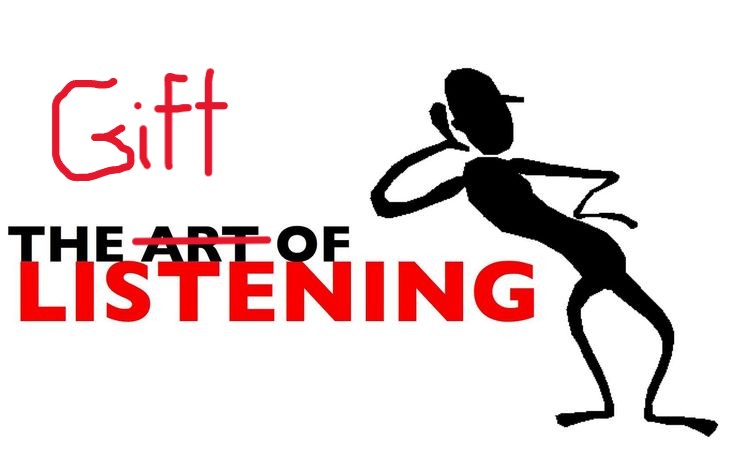
Listening… a gift?!?

If ever there was someone who appeared to have it all — family, wealth, prestige, position — it was Job. He lived centuries ago in the Near East. He had a large family (seven sons and three daughters), LOTS of livestock (7000 sheep, 3000 camels, 500 yoke of oxen, 500 donkeys), and numerous servants. His reputation was impeccable. He was described as being blameless, upright. A man who respected and reverenced God. A man who shunned/avoided evil. He was “the greatest man among all the people of the East.”1

Then, in one fell swoop, it was all gone. (This is a true story, by the way!) All of his children tragically died while feasting and drinking at the oldest brother’s house. The oxen were stolen. The sheep were burned up by fire from heaven. The camels were carted off by enemies. His servants — all but the ones who delivered the devastating news to Job — were murdered. One thing after another, in quick succession. Family. Possessions. ALL. Gone.

Job responded in a manner that revealed the true character of his heart:

I came naked from my mother’s womb,
and I will be naked when I leave.
The Lord gave me what I had,
and the Lord has taken it away.
Praise the name of the Lord!

Job 1:20

Wow. Not exactly how I would respond to such news.

As if all these blows hadn’t been enough, the next thing that happened affected Job physically: his body was covered with painful sores (boils) from the soles of his feet to the top of his head. Yuck. To try and get relief, he scraped his skin with a piece of broken pottery while sitting among ashes. 2 Double yuck.

Mrs. Job had a completely different response when she learned what had happened… the death of her children, the loss of all their possessions and all their wealth, the anguish her husband was experiencing physically. Her response to Job is one I can totally understand. Why? Because it’s hard to watch someone you love suffering — especially when it’s family.

Are you still trying to maintain your integrity?
Curse God and die! 3

Amazingly, Job never wavered in how he viewed the cataclysmic scenario he found himself in. He responded to her by saying,

“You talk like a foolish woman. Should we accept only good things from the hand of God and never anything bad?”4

In all that Job experienced, he said nothing wrong.

Wow. Again.

Three of Job’s friends, upon learning of the tragedies he had suffered, traveled from their homes to comfort and console him. When they saw him from a distance, they could hardly recognize him. They wailed. They tore their robes. They threw dust into the air over their heads, which was a way of showing grief in the ancient Near East. They sat on the ground with Job for seven days and nights. No one said a word to him, for they saw that his suffering was too great for words.5

So far, so good in terms of knowing how to come alongside someone who is hurting.

But then they really messed up. They started trying to figure out WHY Job was suffering. WHAT he had done or not done that merited such calamity. They came with their preconceived ideas, basically that Job’s circumstances and his response to them must mean he’s wrong before God and needs to acknowledge and deal with that. Each one gives a speech, Job responds, and then they go at it for another round.

Finally, Job has enough. He turns to his friends and says,

Listen closely, carefully to what I am saying.
Do me the favor of listening…
That’s one consolation/comfort you can give me.

Job 21: 2

Listen closely. Listen carefully. The one thing that could console and comfort. The one thing that could communicate genuine care. The one thing that could be a balm to Job’s weary, disheartened soul.

The gift of listening.

Learning to listen — and to listen well — is a skill. It’s a skill that helps the other person feel safe, respected, valued. It helps them feel validated and understood. It builds trust. It’s other-oriented. Other-focused.

I don’t know about you, but sometimes I fall into the trap of half-listening. I hear what is first said, but then my mind goes off on a tangent. It scrolls through possible responses based on past experiences, personal opinions (and sadly, prejudices), something I may have heard or read. By then, I’m not tracking with what the other person is saying. I’m too eager to share MY thoughts!

Some tips I’ve been learning for being a better listener, one who gives the gift of listening:

  • Be fully present in the conversation. One way to do that is to turn off your cell phone to avoid the temptation to look at it! Avoid other distractions as well, like people-watching. I often choose a seat in a coffee shop where I have my back to most of the tables so that I can focus more completely on the person I’m with. What things preoccupy you and hinder your ability to focus on the other person? Eliminate them!
  • Be aware of your body language. Lean in toward the other person — it communicates that you are wanting to hang onto their every word! Avoid crossing your arms, as if making judgment.
  • Be attentive to the other person’s body language and other non-verbal cues. Are they tense? Eager? Anxious? Are they avoiding eye contact with you? Are they fidgety? Do you sense they have more to say… or that they want to end the conversation?
  • EYE CONTACT!!! It’s hard to pick up on non-verbal cues if you aren’t looking at the other person! Sometimes the other person is searching for words to express what they’re feeling or perhaps struggling to say what’s really on their heart… and if you aren’t looking at them, it’s far too easy to interpret the pause as a time to jump in with what you’re thinking.
  • Give them time! This is especially true if the speaker is a verbal processor, one who needs to “think out loud” to figure out what’s going on inside. I’m a prime example, and this sometimes drives my husband crazy! “Why didn’t you say that at the beginning of the conversation?!?” he groans. “Because I didn’t know what I was thinking then!” I respond.
  • Reflect back to them what has been said. Paraphrase what you have heard — to make sure it’s actually what they wanted to say! Ask, “This is what I hear you saying. Is this accurate?”
  • Ask questions that encourage further responses — not just “Yes” or “No” answers. Ask them to help you understand ______ better. Or to give more examples. Ask clarifying questions.
  • Avoid the temptation of jumping in with solutions. Most people are looking for someone who HEARS them and gives them the space, the freedom to figure out their own solutions.
  • Listen to understand… rather than to respond.
  • Don’t be afraid of silence. Learn to be comfortable with it.

Learning to listen. The GIFT of listening. A skill that can be learned. A skill that gets better with practice. A skill that is other-focused.

Job’s friends started out well by sitting silently with him, just being there. Sometimes, just being there is all someone needs. But his friends, like me — and possibly you? — needed to grow in their listening skills. By the end of the story, God takes them to task and they own up to their folly (see chapter 42)… so there’s hope!

Yes! Life is a journey, and we’re all in the process — hopefully — of learning, growing. May we encourage one another to look for ways to offer the gift of listening, and together to have joy in the journey of this thing called “Life!”

  1. see the book of Job in the Old Testament of the Bible; first chapter ↩︎
  2. Job chapter 2 ↩︎
  3. Job 2: 9 ↩︎
  4. Job 2: 10 ↩︎
  5. Job 2: 11-13 ↩︎

Who??? Why???

I had never even met Jonathan. A good friend of mine, a teacher at his school, sent a text message saying

Prayers are appreciated for our GIS [Grace International School] community. A student passed away last night in a motorcycle accident.

17 years old. A high school senior. The previous day, he and some buddies had driven to a nearby mountain to view the sunset. We’ve had LOTS of rain in this part of the world lately, and so being able to finally see a sunset was a big deal. One of those friends later recounted how Jonathan had remarked “how amazing God has made the world for us!” The friend went on to say, “Jonathan finds beauty in everything because he knows the Creator.”

I’m at a loss to be able to explain why I’ve been so drawn to learning about this young man. For who-knows-what-reason I watched the High School Chapel Remembrance a few days after his death. And then the Celebration of Life Service two days later.

Maybe it’s because of being a mom. No parent envisions outliving their child.

Maybe it’s because of feeling the brokenness and confusion of his classmates. No high school student envisions missing graduation because of not being alive.

Maybe it’s because of feeling that it simply wasn’t fair. Why him, God??? Why a young, godly kid who had a whole lifetime ahead of him — a whole lifetime of being able to impact the world for Christ???

Precious in the sight of the Lord is the death of His saints. (NIV)

The Lord cares deeply when His loved ones die. (NLT)

When they arrive at the gates of death,
God welcomes those who love Him. (MSG)

Psalm 116: 15

Yes, those verses are true. And yes, I believe in them… and in the God whose ways are often vastly different than if I were the one in charge. And yet… listening to the Chapel and Celebration of Life services hammered home some important truths — truths that impact all of us.

Life is short.

Death is unavoidable.

We all have a choice to make.
Some have decided… and some have not.

But even indecision is still a choice.

If we choose to sit on the sidelines,
what Jonathan would want you to know
is that you need to get into the game.

Cross over from sitting on the bench
and start participating in the great mission
that God has for your life.

Jonathan loved well
because he knew the God who loves best.

Mr. T, one of the faculty/staff at GIS during the Chapel Service

We all have a choice to make… even indecision is still a choice… you need to get into the game.

Death is the one thing in life that everyone can count on. It affects 100% of us… and, as Jonathan’s untimely (to us, anyway) demise highlights, it is no respecter of age. Or income. Or education. Or social status. Or background.

I’m not sure who all reads my blogs… family, friends, others I’ve never met. But regardless of who we are, where we come from, what our past has been like there’s a loving God who wants to have a personal relationship with us. A relationship that can only be had on His terms, which involves His Son.

God knows the pain and anguish Jonathan’s parents have been going through because He gave His Son — His only Son — to die so that you and I can have relationship with Him. We can be forgiven of any and everything in our past. We can look forward to the future because His Son not only died, but then was raised from the dead and now lives forever! He’s not some kind of idol made from silver or gold or wood or crystal… idols that have mouths, but cannot speak; eyes, but cannot hear; noses, but cannot smell; hands, but cannot feel; feet, but cannot walk; throats that cannot utter a sound.

Dear friends — wherever you may be in your journey of knowing and embracing God through Christ — NOW is the time to “get into the game,” as Mr. T shared. NOW is the time to quit dilly-dallying about your eternal state. We have no guarantees when our lives will end… but we DO have the guarantee that once we put our faith and trust in the finished work of Christ we’ll be able to look forward to an eternity with God.

“Jonathan loved well because he knew the God who loves best.”

May we, like Jonathan, love well because of knowing the God who loves best. And may we encourage one another to seek joy in the journey of this thing called “Life!” For even in deep sorrow there can be great joy when one knows God personally.

Lost in translation

photo credit: author’s phone screenshot

Telemarketers. Nobody’s favorites. But I must admit that the voicemail transcriptions of messages we get here in Thailand are definitely amusing! And, as the above attests, some things definitely get lost in translation!

As I was talking with my husband this morning, his bewildered look made me realize something in our communication had been lost in translation — even though we speak the same language!

More often than I would like to admit, I have a tendency to jump into a conversation sharing details or comments without first saying what I’m referring to. It’s clear in my mind what I’m talking about, but my poor husband — and others — aren’t able to track with me because I’ve forgotten to mention the introductory comments, so to speak. I may be looking at my laptop, commenting on something I’ve just read — without first saying what the article is about. Or looking intently at the GPS on my phone while my husband is driving — without clueing him in to what I’m seeing and why he needs to make a turn. NOW!

A couple of things I’ve been learning over the past years is that NO one is a mind reader. And NO one is able to accurately discern what is going on in someone else’s heart or mind.

That’s why two-way communication is crucial. Otherwise, things get lost in translation… or, said another way, one’s intended meaning often gets misconstrued as we translate what was said through the grid of our own experiences.

Learning that my husband can’t read my mind has been a game-changer for us. We’ve been married a LONG time, and he does a pretty good job of picking up on things, of “reading” me — and I him. And yet there is always the possibility that one of us has misread the situation. That we fill in the blanks from our own experiences. That we draw wrong conclusions from our limited input, not knowing all the facts. We mistranslate what we’re seeing or hearing. Something gets lost in translation. And someone ends up being misunderstood. Confused. Frustrated.

This also happens among friends. One person says something, and the other thinks they know what their friend is talking about and jumps in with their opinion or advice or whatever. Those conclusions may be totally incorrect, and within minutes a misunderstanding is brewing. Sometimes an argument ensues. One person often shuts down and doesn’t say anything else. And usually, both parties leave the conversation feeling they weren’t listened to or understood. Barriers are built, and if not resolved, grudges form. Grudges that, if left unchecked, can last for decades.

All because of a breakdown in communication.

A few years ago this happened to me. A good friend made a comment that caught me totally off guard. A comment that was made on a false assumption. I was stunned. Confused. It was like being stabbed in the back — except it was said to my face. Instead of withdrawing, which would’ve probably killed our friendship, I confronted her. I asked her if what she was saying was in line with what she knew of my character. I asked if she were open to hearing things from my perspective. And I also told her how much what she said hurt.

Thankfully, we talked things through and resolved the misunderstanding. And our friendship remained intact.

This made me wonder, though…

  • How often do I say or do something without first thinking through what I want to say?
  • Do I jump to conclusions before hearing all the facts?
  • Do I listen — really listen — when others are speaking? Or am I so eager to add my two cents that I only halfway hear what they are saying?
  • Am I willing to ask clarifying questions instead of barging ahead with my preconceived ideas and conclusions?
  • Do I take the initiative to clear up any misunderstandings before they morph into something that could potentially destroy a relationship?

Ugh. I’ve got to admit that I’m still learning a lot about two-way communication. Things still occasionally get lost in translation. But I’m increasingly aware of the danger of trying to read others’ minds. And I’m also realizing how, try as I might, I usually don’t have the whole picture to be able to accurately discern what is going on in someone else’s heart or mind.

The half-brother of Jesus wrote some wise words regarding communication:

Everyone should be
QUICK to listen,
SLOW to speak, and
SLOW to become angry…

Or… said another way…

Be a careful, thoughtful, listener,
a speaker of carefully chosen words,
patient, reflective, forgiving…

from the New Testament book of James, chapter 1 verse 19

Yep. I still have a LONG way to go in consistently putting this into practice! But hopefully, as we — you and I, dear reader — do this, we can have increasing joy in the journey of this thing called “Life!”

Strange battle plans…

photo credit: davida.davivienda.com

The battle plan eight-year-old Kevin McCallister came up with in the classic film Home Alone was elaborate. Unique. Creative. Definitely not something I personally would’ve come up with to deter the “wet bandits,” two bumbling thieves who targeted wealthy homes during the Christmas holidays. And yet it worked!

The Bible has some pretty elaborate and unique battle plans as well. Creative. Hard to imagine, and yet they worked.

I’ve been reading in the Old Testament of the Bible the past few months. I’m now at the part where this large group of people — the Israelites — is FINALLY ready to enter the Promised Land. Their journey from slavery in Egypt until now has been long — over 40 years! Their leader Moses has died, and now his protege/successor Joshua is in charge.

Joshua’s first assignment is to lead the people across the Jordan River, a feat reminiscent of when Moses led them across the Red Sea. Both times God miraculously parted the waters and the people crossed on dry ground.

First assignment, COMPLETED.

Next assignment: destroy the city of Jericho. This was one of those strange battle plans — walk around the city for seven days. With the priests at the front of the procession blowing trumpets. On the seventh day, circle the city seven times. Then, when Joshua gave the command, everyone was to shout. Miraculously, the city walls fell down and the city was conquered.

Second assignment, COMPLETED.

The third assignment was to capture the city of Ai. Piece of cake, thought the Israelites. But because ONE person had disobeyed the clear command to “keep away from the things devoted to destruction” 1 when they were destroying Jericho, the battle to take Ai was a dismal failure resulting in loss of life and morale.

Assignment # 3: FAILED.

But God graciously gave the Israelites a second chance to destroy Ai, and this time they were successful.

The strange battle theme continues with their next foray. This time, they were tricked by some of the people in the land who “feared greatly for [their] lives because of you [Israelites].” 2 When the enemy tricked the Israelites, their deception led the Israelites to make a treaty with this enemy nation, a treaty promising that the Israelites would come to the country’s aid if they were ever attacked. Ugh. NOT a good game plan. To make matters worse, the Israelites forgot to first inquire of the Lord if this was how HE wanted them to proceed . 3

Another king and his people who heard about the annihilation of Ai were “very much alarmed.” 4 And some more kings had a similar reaction when they heard how God had dried up the Jordan River so that the Israelites could enter the land. “Their hearts melted and they no longer had the courage to face the Israelites… we feared for our lives because of you.” 5

People were afraid of the Israelites. Understatement! And so five kings banded together to attack the nation that had made the treaty with the Israelites. These kings knew that such an attack would obligate the Israelites to honor their treaty, which meant war.

Several things stand out to me about this battle:

  • Even though the Israelites had blown it by making a treaty without first inquiring of the Lord, God still fought for them.
  • Joshua honored the treaty to the fullest. He didn’t send just a few soldiers, a skeleton crew so to speak. But rather his entire army, including all the best fighting men. (see Joshua 10:7)
  • Even before Joshua and his men began their all-night march to the battlefield, God reassured Joshua: “Do not be afraid of [the enemy nations]; I have given them into your hand. Not one of them will be able to withstand you.”6 Did you catch that? Victory was assured before the battle even started!
  • The Lord threw the enemy into confusion/a panic so that they fled from the Israelites. As they were fleeing, “the Lord hurled large hailstones down on them from the sky, and more of them died from the hailstones than were killed by the swords of the Israelites.” 7
  • As if that wasn’t strange enough, something even more elaborate and unconventional– even by Home Alone standards — happened: “the sun stopped in the middle of the sky and delayed going down about a full day.” 8

The sun stood still.

Wow. Talk about strange battle plans! God made daylight last longer so that the Israelites had sufficient light to accomplish His plan.

But what does this have to do with you and me???

  • I need to remember to first inquire of God before starting anything! I can be rather impulsive, running ahead of God and then hoping He’ll understand and bless my efforts. BUT… I need to realign my thinking and go to Him first. WAIT upon the Lord.
  • I also need to remember that GOD will fight my “battles” — and that His methods are often rather unconventional. My battles aren’t the conquering-a-nation kind, but other things I deal with in my life, like believing the truth about what God says about me instead of the lies of the enemy.
  • How often do I limit God because what He says doesn’t make sense to me? Or the timing doesn’t agree with my preconceived ideas? Or my assessment of my abilities — or lack thereof — doesn’t jive with His?
  • God means what He says about wanting His people to be set apart/different/holy. Not tied to the things of this world.
  • If I covet something — meaning desire or hope for — it often reveals a lack of contentment. Ugh.
  • Part of my “job” is to rightly reflect Him to the world in which I live. To enhance His character among others. And when I blow it, to quickly quit trying to do things/succeed on my own — to get out of the way so that God can do His thing!

Yep. My “battle plan” isn’t as elaborate and creative as Kevin McAllister’s. It’s actually rather simple: love God and others with all my heart, soul, and mind. And as I learn to more consistently do this, I anticipate much joy in the journey of this thing called “Life!” Will you join me?!

  1. Joshua 6:18 ↩︎
  2. Joshua 9:24 ↩︎
  3. Joshua 9:14-15 ↩︎
  4. Joshua 10:2 ↩︎
  5. Joshua 5:1; 9:24 ↩︎
  6. Joshua 10:8 ↩︎
  7. Joshua 10:11 ↩︎
  8. Joshua 10:13 ↩︎

Remembering… ten years on…

photo credit: bible.faithlife.com

Music has a way of transporting me to another time… to another place…

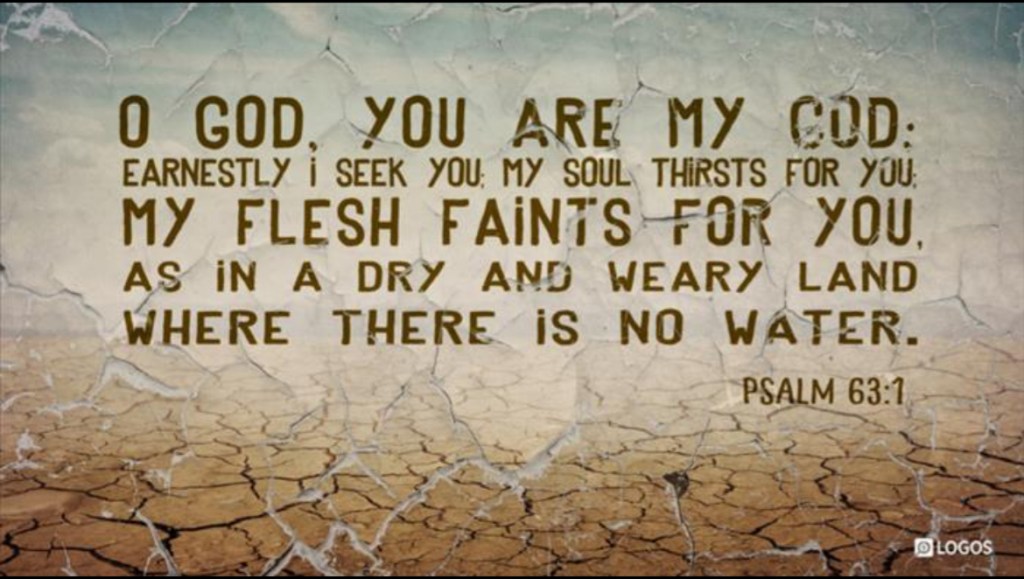
I was reading in the Old Testament Book of Psalms earlier this week. Psalm 63. The words jogged my memory, surfacing the summer of 2008…

My mother had sold our family home and was preparing to move permanently to Florida. Daddy had been gone for seven years, and so we three kids were helping with the gargantuan task of emptying the home they had lived in since newlyweds, the home where we had grown up. Over sixty years of “stuff” had accumulated. My parents grew up during the Great Depression, which meant that things were saved “just in case” there might be a need somewhere down the road.

Going through this “stuff” was like walking through a museum. Ration cards from WW II. My mom’s gym uniforms from what had been an all-girls college (now a coed university). I convinced her to send the uniforms (still in great shape!) to the university. Maybe their archives would want them for who-knows-what-reason?! That seemed to make letting go a bit less painful.

Other treasures included countless wooden boxes of glass Coca-Cola bottles. My dad, who grew roses as a hobby, would take flowers — in Coke bottle vases — to our local hospital each week for patients who didn’t have any visitors. My quiet dad. Bringing encouragement to others. I never knew he had done this until after he died. Until we were emptying the shed where they’d been stored.

There were letters and cards — birth announcements for us kids, birthday and Christmas cards. I could reconstruct my life just from all the correspondence! And family journals from our annual camping trips. My mom usually made the daily entries, but later I started writing about our adventures. Hmm… I wonder if that’s where my love of writing began??

As I was reading Psalm 63, I was once again sitting in my bedroom that summer. Sitting in the yellowed upholstered chair that had been my grandparents. Using MomMom’s treadle sewing machine as my coffee table. A floor lamp from my other grandparents shedding light on my Bible.

It was an intense, yet precious time. Exhausting. When I finally returned home (we were living in Romania back then) seven weeks later, my husband thought I must have cancer I looked so bad!

Every morning, before tackling whatever projects loomed before us that day, I would sit in that yellowed chair and listen to a song based on Psalm 63.

Oh, God, my God, I seek Your face
You’ll always be my resting place
My body’s weak and my soul is dry
Your love alone can only satisfy my heart
And fill me with delight
Oh, God, my God, You are my life

I have see You in the quiet times
with no one else around
Your power and Your glory overwhelm me
And no matter what tomorrow holds
my praise will know no bounds
for Your presence will be there again to help me…

“Oh God, My God” sung by Glad

No matter what tomorrow holds…

no matter what TODAY holds…

That song, those sentiments and the truths they reflect are part of what got me through that summer. And they still ring true for me today.

God truly is my resting place. My body often is weak, and sometimes my soul is dry. And yet His love — His love alone — is able to fully satisfy the yearnings of my heart, my soul. His power and His glory overwhelm me at times. And I’m confident that He’ll always be with me, that He’ll never leave or forsake me. Because of that, my praise knows no bounds!

Today marks ten years since we said goodbye here on earth to my mom. I’ll always treasure that time we had together going through our family home, reliving and releasing memories. I’m grateful for how her life impacted mine — and still does. Because of her and because of our heavenly Father I’m able to have joy in the journey of this thing called “Life!”

Swan Song…

photo credit: aminoapps.com

Last night was my swan song. My “farewell appearance,” as it were. I had stepped down from being in leadership the end of last year (2023)… but one thing after another postponed this time of recognition until last night. To be honest, I would’ve been quite alright if it had been totally forgotten!

I was asked to share some of the things I had learned in my roles as a leader. It was a Zoom meeting, and looking at all those little pictures on the screen– pictures that filled one whole screen and overflowed to a second — catapulted my mind from the present to a host of past memories. Some of those on the screen were dear friends from every season of my life: early days when we lived in Romania; weekly Home Fellowship gatherings in our home in Vienna; conferences in Europe; trainings here in Thailand; teammates who walked with me in the roles that were being honored. Some were new faces that were “meeting” me for the first time virtually.

But BEFORE I shared, those on the Zoom call were asked to write down something they appreciated about me. Oh, brother. That undid me… and made it hard to focus on what I had wanted to say. I stumbled on, unsure of what I actually said! And reflective person that I am, knowing LATER there were things I forgot and things that were unclear. So… for my own benefit, bear with me as I revisit the question…

What are some things you learned in your leadership roles?

  • The importance of teamwork. I describe myself as a “reluctant leader.” I think that’s one reason I like reading about Moses in the Old Testament of the Bible. Neither he nor I jump at the chance to be in charge — but rather look at all the things we can’t do, all our inadequacies. I need a significant nudge — more like a kick in the pants — to move into uncharted territory.

That’s how I ended up in these leadership roles. My significant nudge came from God’s Spirit prodding me, propelling me… and yet also like Moses, I wouldn’t be alone in these new responsibilities. Moses had his brother Aaron as his spokesperson; his sister Miriam as a strong support; Hur — the one who helped Aaron hold up Moses’ arms in a crucial battle; his father-in-law Jethro who wisely counseled him to ask for help. I had a team of godly women who played similar roles in my life… and for each of them I’m extremely thankful.

  • The benefits of teamwork. Close relationships developed with these dear women. As we worked together, we became more vulnerable — recognizing not only our varied strengths, but also acknowledging our sometimes-hidden weaknesses. Honest sharing — not saying what we thought the other person wanted to hear. Expected to hear.

And yet with that openness and honesty, misunderstandings could surface, especially since most of our interactions took place on Zoom calls. It’s hard to read one’s body language, “hear” one’s heart when the screen has multiple faces staring at you. It’s impossible to “see” everyone at the same time. And so taking the initiative to clear up any perceived misunderstandings became paramount, especially before they morphed into something bigger. Like the proverbial making a mountain out of a mole hill.

  • Embracing the ebb and flow of life. One of my philosophies of life is that “Life is not convenient.” Before one of our trainings, I wrote to a friend:

“I feel like I’ve been playing ‘whack-a-mole’ with the upcoming women’s training conference… things just keep popping up, and as soon as one is ‘whacked’ down something else seems to come out of nowhere! Pray that I won’t be so weary and consumed by all the details that I miss out on seeing God at work.”

That busy pre-conference time was what I call a “period of imbalance.” Life doesn’t go at a constant, manageable pace. Sometimes it gets downright crazy! But this imbalance usually doesn’t last forever. There IS light at the end of the tunnel. And during these times, we need to give ourselves — and others — a LOT of grace.

  • The importance of believing in one another… yourself… and God. This goes back again to the importance of teamwork. But it also underscores the fact that ultimately, all that we do is not for our glory, for our success, but rather to bring honor and glory to God. To help others see and embrace Him.

Yep. That’s what I had wanted to say. These are also lessons I’m continuing to learn. And as I learn, I’m grateful, dear reader, that you’re with me as we find joy in the journey of this thing called “Life!”

PS

A “swan song” is defined as the last act, appearance, publication, or utterance of a person before retirement or death. I’m obviously still alive! And we’ve not retired. It’s just that God has redirected my focus to be able to have more time — and energy — to be a support to my husband in this season of our lives.